
E. M. Bounds: The Man Who Taught the Church to Pray Again
Discover the life and legacy of Edward McKendree Bounds — the Methodist preacher, Civil War chaplain, writer, and man of prayer whose books still call the Church back to the secret place, holy discipline, and power with God.
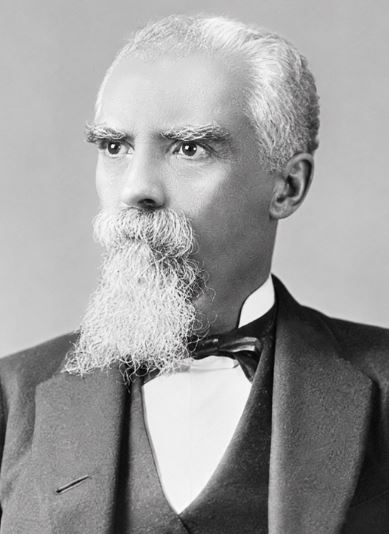
Who Was E. M. Bounds?
Edward McKendree Bounds, better known as E. M. Bounds, was an American Methodist preacher, author, and former lawyer whose name has become almost inseparable from the subject of prayer.
He was not remembered because he built a religious empire. He was not remembered because he mastered publicity, filled stadiums, or created a movement around his personality. Bounds is remembered because he touched one of the most neglected foundations of Christian life: the hidden life of prayer.
His writings do not flatter the modern believer. They expose us. They confront the weakness behind our religious busyness. They ask whether our work for God is truly born from communion with God.
Bounds understood something the Church keeps forgetting: methods cannot replace prayer, activity cannot replace anointing, and public ministry cannot survive without private fire.
— E. M. Bounds
From Law to the Ministry
E. M. Bounds was born on August 15, 1835, in Shelby County, Missouri. Before he became known as a preacher and writer, he studied law and entered legal practice as a young man.
This part of his story matters. Like Charles Finney before him, Bounds had a legal background. But while Finney's legal mind later thundered through revival preaching, Bounds' life took a quieter route. His legacy was not primarily courtroom-like argument. It was spiritual insistence.
Bounds eventually left the path of law and entered the Methodist ministry. He was ordained and began serving as a pastor, stepping into a calling that would shape the rest of his life.
The lawyer became a preacher. The preacher became a man of prayer. The man of prayer became a voice that would outlive his generation.
Ruthless lesson: Bounds reminds us that calling is not proven by noise. Some people want influence before they have depth. But God often hides a person first, disciplines them deeply, and only later lets their words travel further than their feet ever could.
The Civil War and the School of Suffering
Bounds' ministry was deeply marked by the American Civil War. He served as a chaplain during one of the most painful and divided periods in American history.
This was not a romantic chapter. War exposed him to suffering, grief, and the severe fragility of human life. It forced him to face realities that comfortable religion often avoids.
Bounds was also imprisoned during the war. After his release, he continued in ministry and gave himself to rebuilding spiritual life among people wounded by conflict.
That experience matters because Bounds did not write about prayer as a religious theory. He wrote as a man who had seen human strength collapse. He knew that eloquence, personality, and organization were not enough.
In the furnace of suffering, Bounds learned that prayer was not an accessory to ministry. Prayer was the ministry behind the ministry.
The Secret Place Behind the Public Life
The public story of E. M. Bounds is his writing. The hidden story is his prayer life.
Bounds is often remembered as a man who rose early to pray. His life carried the discipline of a person who believed that the first business of the day was not correspondence, planning, preaching, or administration. It was meeting with God.
This is where Bounds becomes dangerous to modern Christianity.
We live in a generation that wants spiritual output without spiritual formation. We want content without consecration, platforms without prayer, influence without intercession, and results without travail.
Bounds cuts through that illusion. He argues that the man himself is the sermon before the sermon is ever preached. A powerless man cannot consistently produce powerful ministry by clever technique.
— E. M. Bounds
Power Through Prayer
Bounds' best-known work is Power Through Prayer. It remains one of the most direct and searching books ever written on the relationship between prayer and preaching.
The central burden of the book is simple but devastating: preaching without prayer may be religious speech, but it lacks divine power.
Bounds was not impressed by talent detached from holiness. He was not impressed by polished sermons that had not passed through the secret place. He believed that true preaching was not merely the transfer of information. It was truth carried by a consecrated life.
That is why his message still lands with force today. We are surrounded by sermons, podcasts, livestreams, devotionals, reels, conferences, and religious media. Yet the question remains: how much of it is born in prayer?
Bounds would not ask first whether the sermon was clever. He would ask whether the preacher had been with God.
Prayer as the Foundation of Ministry
Bounds believed prayer was not one department of Christian work. It was the foundation of all Christian work.
A church may have music, programs, committees, buildings, branding, and strategy. But if prayer is weak, the spiritual foundation is weak.
This is a hard truth because prayer is one of the easiest things to praise publicly and neglect privately.
Many believers agree that prayer matters. Fewer actually build their lives around it.
Bounds' writings confront that contradiction. They force us to ask whether prayer is truly central or merely decorative. Is it the engine of our life with God, or is it religious language we use to make our plans sound spiritual?
Ruthless lesson: Never measure your spiritual life only by what you produce publicly. Measure it by what survives when nobody is watching. The secret place is where exaggeration dies.
The Preacher and Prayer
E. M. Bounds had a special burden for preachers.
He believed that the spiritual condition of the messenger mattered deeply. A sermon was not just words arranged in order. It carried the weight, weakness, purity, or shallowness of the person delivering it.
This is why Bounds warned against relying too heavily on machinery, systems, and methods. He was not against order. He was against the kind of religious professionalism that can operate even when the soul is dry.
His message is uncomfortable because it exposes a temptation in every generation: to improve the packaging while neglecting the altar.
Bounds would tell the modern Church that better lighting, better sound, better editing, better branding, and better communication cannot compensate for prayerless leadership.
Skill can gather attention. Prayer carries authority.
The Books of E. M. Bounds
E. M. Bounds wrote extensively on prayer, but much of his influence grew after his death. Several of his writings were published posthumously and became classics among believers hungry for a deeper prayer life.
His major works include:
- Power Through Prayer
- Purpose in Prayer
- The Necessity of Prayer
- The Essentials of Prayer
- The Reality of Prayer
- The Weapon of Prayer
- Prayer and Praying Men
These books are not casual inspirational reading. They are spiritual surgery. They cut beneath appearance and ask whether the believer's life is truly rooted in communion with God.
Bounds wrote like a man who believed prayer was not optional for the Christian life. It was oxygen.
Why E. M. Bounds Still Matters Today
E. M. Bounds still matters because the Church is often tempted to substitute motion for power.
We can organize without unction. We can post without prayer. We can preach without travail. We can build religious brands without building hidden altars.
Bounds exposes that danger.
His life asks hard questions:
- Are we praying, or merely talking about prayer?
- Are our public works stronger than our private devotion?
- Are we depending on God or depending on systems?
- Do we want spiritual authority without spiritual discipline?
- Are we building altars, or only building platforms?
These questions are not comfortable. But they are necessary.
A prayerless Church can still be busy. It can still be impressive. It can still look alive. But without prayer, it lacks the deep current of divine life.
E. M. Bounds and Charles Finney: Revival and Prayer
Charles Finney and E. M. Bounds were different men with different emphases, but their messages meet at one crucial point: revival is not born from spiritual laziness.
Finney pressed the Church toward repentance, obedience, and revival conditions. Bounds pressed the Church toward prayer, consecration, and hidden communion with God.
Finney reminds us that truth must demand a response. Bounds reminds us that the messenger must first be formed in the secret place.
Together, they confront the modern believer with a painful but necessary truth: God's work must be done God's way.
Read more about Finney here: Charles Finney: Father of Modern Revivalism.
Famous E. M. Bounds Quotes
- "Prayer is not learned in a classroom but in the closet."
- "Men are God's method. The Church is looking for better methods; God is looking for better men."
- "The story of every great Christian achievement is the history of answered prayer."
- "Talking to men for God is a great thing, but talking to God for men is greater still."
- "Prayer succeeds when all else fails."
- "What the Church needs today is not more machinery or better, not new organizations or more and novel methods, but men whom the Holy Ghost can use."
Lessons From E. M. Bounds' Life
1. Prayer must be central, not decorative.
Bounds teaches that prayer is not something added to ministry after planning. It is the source from which true ministry flows.
2. The secret place shapes the public man.
A person may impress people publicly while remaining weak privately. Bounds reminds us that God forms His servants in hidden communion.
3. Methods cannot replace spiritual power.
Systems, strategies, and platforms have their place, but they cannot substitute for anointing.
4. Suffering can deepen prayer.
Bounds' life was touched by conflict, loss, and hardship. His writings carry weight because they were not produced in comfort alone.
5. A man may die before his influence fully begins.
Much of Bounds' influence spread after his death. Hidden faithfulness often produces fruit beyond a person's lifetime.
Frequently Asked Questions
Who was E. M. Bounds?
E. M. Bounds, whose full name was Edward McKendree Bounds, was an American Methodist preacher, author, and former lawyer best known for his classic writings on prayer.
What is E. M. Bounds best known for?
He is best known for books such as Power Through Prayer, The Necessity of Prayer, The Essentials of Prayer, and The Weapon of Prayer.
Was E. M. Bounds a pastor?
Yes. Bounds served as a Methodist minister and pastor. He also served as a chaplain during the American Civil War.
Why are E. M. Bounds' books still read today?
His books are still read because they speak directly to the heart of Christian devotion. They challenge believers, pastors, and churches to return to prayer as the foundation of spiritual power.
What was E. M. Bounds' main message?
His main message was that prayer is essential to Christian life and ministry. He believed that true spiritual power comes from deep communion with God.
When was E. M. Bounds born?
E. M. Bounds was born on August 15, 1835, in Missouri.
When did E. M. Bounds die?
E. M. Bounds died on August 24, 1913, in Washington, Georgia.
Recommended Book
To go deeper into E. M. Bounds' writings on prayer, begin here:
Disclosure: As an Amazon Associate, Fire Trail may earn from qualifying purchases.
Final Reflection: The Question That Still Burns
E. M. Bounds leaves the Church with a direct and uncomfortable challenge.
Stop pretending that activity is the same as power. Stop confusing religious content with spiritual authority. Stop measuring ministry only by visibility, numbers, or noise.
Bounds would bring us back to the secret place.
Are we praying? Are we waiting before God? Are we allowing Him to search us? Are we building our work on communion, or are we asking God to bless what prayerlessness has already built?
The Church does not merely need better methods. It needs men and women who know God.
The altar must come before the platform.
The secret place must come before the sermon.
Prayer must come before power.
The question is not whether Bounds was right.
The question is whether we will respond.