
Leonard Ravenhill: The Man Who Asked Why Revival Tarries
Discover the life of Leonard Ravenhill — the English preacher, intercessor, and prophetic voice whose uncompromising message on prayer, revival, and the cost of following Christ still confronts the Church today.
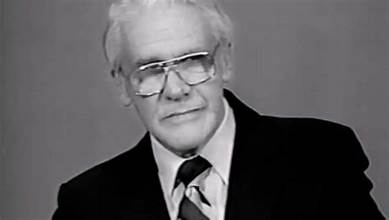
Who Was Leonard Ravenhill?
Leonard Ravenhill was an English evangelist, author, and intercessor widely remembered for one central burden: the Church must return to prayer if it wants true revival.
He was not a comfortable preacher. He was not trying to build a soft audience, a polished brand, or a ministry machine. Ravenhill preached like a man carrying a wound. His words were sharp because his burden was heavy.
His most famous book, Why Revival Tarries, became one of the most searching Christian books of the twentieth century. It did not flatter the Church. It confronted it. It asked why churches could organize meetings, raise money, run programs, and fill calendars — yet still lack the fire and presence of God.
Ravenhill’s answer was direct: revival tarries because the Church has largely abandoned the secret place.
— Leonard Ravenhill
A Voice Formed in Yorkshire
Leonard Ravenhill was born on June 18, 1907, in Leeds, Yorkshire, England. Yorkshire had already produced other fiery Christian voices, including Smith Wigglesworth. It was a region marked by plain speech, hard work, and a serious spiritual heritage.
Ravenhill was converted as a young man and quickly became hungry for more than ordinary religion. He was not satisfied with respectable church attendance. He wanted the reality of God.
He read the lives of earlier revivalists and intercessors — men like John Wesley, Charles Finney, David Brainerd, George Müller, and others whose lives had been marked by prayer, sacrifice, and spiritual authority.
Those biographies did not merely inspire him. They disturbed him. They showed him a standard of Christianity that was costly, holy, and powerful. From then on, Ravenhill carried a painful question: why does the modern Church have so much activity and so little power?
Training at Cliff College
Ravenhill trained for ministry at Cliff College in Derbyshire, England, a Methodist institution known for evangelistic zeal, holiness preaching, and practical ministry training.
There, he encountered a tradition of Christianity that demanded more than belief. It demanded consecration. It demanded surrender. It demanded a life wholly given to God.
For Ravenhill, holiness was never a decorative doctrine. It was the condition of usable vessels. He believed God did not merely need talented speakers. God needed clean hands, burning hearts, and men and women willing to pay the price in prayer.
Ruthless lesson: Ravenhill exposes a lie many believers accept — that spiritual influence comes mainly from gifting. His life says otherwise. Gift may open doors, but prayer gives weight. Without the secret place, public ministry becomes noise.
The Burden for Revival
After training, Ravenhill entered itinerant evangelism. He preached across Britain and later in the United States. He saw conversions. He saw responses. He saw meetings.
But he longed for something deeper: true revival.
To Ravenhill, revival was not a conference, campaign, emotional service, or scheduled religious event. Revival was a divine visitation. It was when God stepped into the room with such weight that sin was exposed, repentance became unavoidable, prayer became desperate, and the Church was awakened from spiritual sleep.
He believed revival could not be manufactured. It could not be advertised into existence. It could not be created by music, lights, platforms, slogans, or religious excitement.
It had to be prayed down.
Why Revival Tarries
In 1959, Leonard Ravenhill published Why Revival Tarries. The book became his defining work and remains the book most associated with his name.
The message of the book is severe but necessary: revival delays because the Church is not desperate enough to seek God with the kind of prayer that revival requires.
Ravenhill challenged comfortable Christianity. He challenged prayerless preaching. He challenged entertainment-driven church culture. He challenged believers who wanted blessing without brokenness and power without holiness.
He was not attacking the Church because he hated it. He was grieving over the Church because he loved it.
That distinction matters. Critics attack from pride. Prophets cry from burden. Ravenhill’s words cut because they came from a man who had first been cut in the prayer room.
— Leonard Ravenhill
Prayer Was Not a Topic — It Was His Life
Many people quote Ravenhill on prayer. Fewer are willing to live what he preached.
For Ravenhill, prayer was not a devotional add-on. It was not a religious habit placed beside ministry. Prayer was the engine of everything.
He believed the prayer room was the true measure of a Christian. Not the platform. Not the microphone. Not the public reputation. Not the size of the audience. The prayer room.
That is why his most famous line still stings: “No man is greater than his prayer life.” It removes the hiding places. It does not ask how gifted you are. It asks how deeply you know God when nobody is watching.
Ravenhill carried a burden for the Church, for revival, and for the lost. He was known as a man who wept, prayed, warned, pleaded, and refused to let the Church become comfortable with spiritual decline.
Friendships That Shaped His Fire
Ravenhill did not walk alone. His life intersected with several significant Christian voices.
Samuel Chadwick, one of the great Methodist voices on prayer, deeply shaped Ravenhill’s understanding of intercession. Chadwick’s emphasis on prayer as spiritual warfare became part of Ravenhill’s own message.
Ravenhill was also connected with A.W. Tozer, another prophetic voice who grieved over shallow Christianity and called believers back to the knowledge of God.
Later, Ravenhill became close to Keith Green, the young Christian musician and evangelist known for his radical call to discipleship. Ravenhill’s influence helped sharpen the message that burned through Keith Green’s music and ministry.
He also shared a burden with David Wilkerson, founder of Teen Challenge and Times Square Church, who likewise carried a prophetic concern for repentance, holiness, and revival.
The Move to America
In 1950, Leonard Ravenhill moved to the United States with his wife, Martha. America offered enormous ministry opportunity, but Ravenhill was not impressed by size, wealth, or religious machinery.
He saw a Church rich in resources but often poor in prayer. He saw activity without agony. He saw organization without unction.
That became one of the central burdens of his American ministry. He preached in churches, conferences, Bible schools, and revival meetings, but he never adjusted his message to make it easier to receive.
Some loved him. Some avoided him. Some were offended. Some were permanently changed.
That is usually what happens when a man refuses to flatter his generation.
What Ravenhill Believed About Revival
Ravenhill’s theology of revival was clear, severe, and deeply practical.
He believed revival is a sovereign move of God, but he also believed God responds to desperate, sustained, corporate prayer.
He believed the Church had substituted programs for prayer, entertainment for worship, celebrity for holiness, and religious busyness for spiritual power.
He believed God was not searching first for gifted men, but for broken vessels. He pointed often to the lives of past intercessors and revivalists because he saw in them the pattern the modern Church had forgotten.
His burden was not nostalgia. He was not merely romanticizing the past. He was asking whether the God who moved before could move again — if His people would humble themselves, repent, and pray.
— Leonard Ravenhill
His Books and Written Legacy
Leonard Ravenhill’s writings continue to confront new generations because they are not built on trends. They are built on eternal things: prayer, holiness, repentance, revival, judgment, eternity, and the glory of God.
His best-known works include:
- Why Revival Tarries — his classic call to prayer and revival.
- Revival God’s Way — a deeper look at the conditions and cost of true revival.
- Sodom Had No Bible — a searching warning about responsibility, judgment, and spiritual light.
- Tried and Transfigured — reflections on the refining work of God.
- America Is Too Young to Die — a prophetic warning to the American Church.
These books do not entertain. They unsettle. They are not written for people who want religious decoration. They are written for people who want fire.
Famous Leonard Ravenhill Quotes
- “No man is greater than his prayer life.”
- “A sinning man stops praying. A praying man stops sinning.”
- “The self-sufficient do not pray. The self-satisfied will not pray. The self-righteous cannot pray.”
- “The Church has many organizers, but few agonizers.”
- “Entertainment is the devil’s substitute for joy.”
- “If Jesus had preached the same message that ministers preach today, He would never have been crucified.”
- “The opportunity of a lifetime must be seized within the lifetime of the opportunity.”
Why Leonard Ravenhill Still Matters Today
Leonard Ravenhill may be more relevant now than when he was alive.
We live in an age of distraction, religious branding, platform-building, content optimization, and entertainment-driven spirituality. Churches can livestream services, manage social media, run events, produce excellent music, and still be nearly empty of prayer.
Ravenhill’s voice cuts through that illusion.
He does not ask whether your ministry looks alive. He asks whether it has fire. He does not ask whether your church is busy. He asks whether it is broken before God. He does not ask whether your content is engaging. He asks whether you know how to travail in prayer.
His message is not convenient, but it is necessary.
Questions Ravenhill Forces Us to Ask
- Am I building a platform or a prayer room?
- Do I want revival, or do I only want the appearance of spiritual excitement?
- Is my prayer life occasional, or is it the foundation of my life?
- Do I measure ministry by visibility or by spiritual fruit?
- Am I willing to be hidden with God before I am seen by men?
- Would my private prayer life support the public influence I am asking God for?
Lessons From Leonard Ravenhill’s Life
1. The prayer room is more important than the platform.
Ravenhill built no empire, but his message still burns because it came from hidden fire.
2. Revival cannot be marketed into existence.
True revival is not a campaign. It is a visitation of God that comes to a humbled and praying people.
3. A soft message cannot heal a dying Church.
Ravenhill’s words were hard because the sickness was deep. Some wounds require a sharp knife.
4. Prayerlessness is not weakness. It is exposure.
A prayerless life reveals dependence on self. A praying life reveals dependence on God.
5. The Church does not need more religious noise.
It needs holiness, repentance, intercession, and the manifest presence of God.
Frequently Asked Questions
Who was Leonard Ravenhill?
Leonard Ravenhill was a British evangelist, author, and intercessor best known for his uncompromising preaching on prayer, revival, holiness, and Christian discipleship.
What is Leonard Ravenhill best known for?
He is best known for his classic book Why Revival Tarries, which calls the Church back to prayer and challenges believers to pay the price for genuine revival.
What did Leonard Ravenhill believe about revival?
Ravenhill believed revival was a sovereign move of God that came in response to deep repentance, holiness, and sustained prayer among God’s people.
Why did Leonard Ravenhill speak so strongly?
He spoke strongly because he believed the Church had become too comfortable with prayerlessness, entertainment, and spiritual shallowness.
Was Leonard Ravenhill connected to Keith Green?
Yes. Ravenhill had a significant relationship with Keith Green and influenced the radical discipleship emphasis that marked Green’s ministry.
When did Leonard Ravenhill die?
Leonard Ravenhill died on November 27, 1994, at the age of 87.
Recommended Book
If you want to encounter Ravenhill’s message directly, begin with his classic work:
Disclosure: As an Amazon Associate, Fire Trail may earn from qualifying purchases.
Final Reflection: The Question That Still Burns
Leonard Ravenhill’s life leaves the Church with one burning question:
Why does revival tarry?
It is easy to blame culture. Easy to blame politics. Easy to blame the younger generation. Easy to blame the world.
Ravenhill would not let us escape that easily.
He would point back to the prayer room. Back to repentance. Back to holiness. Back to the altar. Back to the secret place where public fire is born.
His message is not simply that revival is needed. Many people know that.
His message is that revival has a cost — and the Church must decide whether it is willing to pay it.
God is still looking for men and women who will stop performing spirituality and start seeking Him with desperation.
The question is no longer whether Ravenhill was right.
The question is whether we will respond.