
Pandita Ramabai: The Woman Behind India’s Prayer Revival
Discover the forgotten revival story of Pandita Ramabai — the Indian Christian reformer, educator, and intercessor whose life of prayer helped transform thousands of vulnerable women and girls in India.
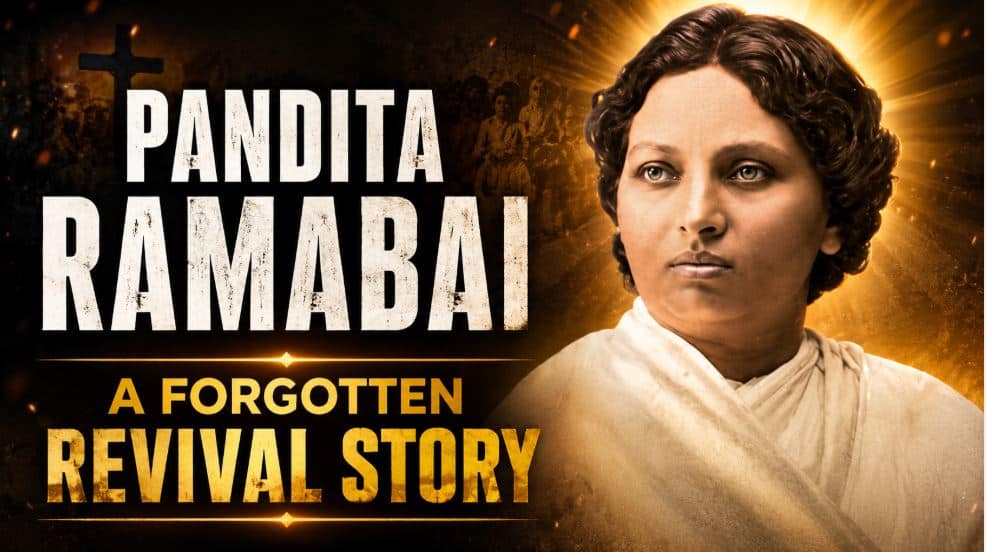
Who Was Pandita Ramabai?
Pandita Ramabai was one of the most remarkable Christian women of the nineteenth and early twentieth centuries. Born in India in 1858, she became known as an educator, social reformer, writer, Bible translator, and defender of vulnerable women.
But behind the public work was something deeper: a life of prayer. Ramabai did not merely build an institution. She built an altar. Her mission became a place where abandoned girls, widows, and the rejected encountered not only shelter and education, but the living presence of God.
Her story matters because it destroys a shallow idea of revival. Revival is not always born in famous pulpits, large auditoriums, or Western mission centres. Sometimes it begins in hidden places — among widows, orphans, rejected women, and people society has already written off.
— Fire Trail Reflection
A Daughter Trained Against the Culture
Ramabai was born into a culture where many women had little access to formal education. Her father, Anant Shastri Dongre, made a decision that was radical for his time: he taught his daughter Sanskrit.
This was no small thing. Sanskrit learning was normally guarded by men and religious elites. For a young girl to be trained in sacred language, philosophy, and religious literature was unusual and controversial.
By the time Ramabai became a young woman, she was intellectually formidable. She could speak, reason, debate, and understand religious texts at a level few women of her generation were permitted to reach.
But education did not protect her from suffering.
The Losses That Broke Her World
Before Ramabai became known as a reformer, she was marked by grief. Her family suffered during famine. She lost her parents. She lost her brother. Later, after marriage, she lost her husband and was left as a young widow with a daughter.
In her world, widowhood could mean social rejection, poverty, and vulnerability. Ramabai understood the pain of women not as an outsider studying a problem, but as someone who had tasted loss herself.
This is important. Her ministry did not begin from theory. It began from wounds. The brokenness she carried became the doorway through which compassion flowed.
Ruthless lesson: many people want influence without wounds, authority without surrender, and fruit without hidden suffering. Ramabai’s life confronts that fantasy. Her work carried weight because it was born in the furnace.
Her Journey to Christ
Ramabai’s conversion to Christianity was not shallow or accidental. She had studied deeply. She had seen the strengths and failures of the religious system around her. She had wrestled with the condition of women, caste, suffering, widowhood, and human dignity.
When she encountered the Bible, she found a God who moved toward the weak, the widow, the orphan, and the rejected. This was not merely an intellectual discovery. It became the centre of her life.
In Christ, Ramabai found more than personal comfort. She found a foundation strong enough to build a life of costly service.
Sharada Sadan: A Home for the Rejected
In 1889, Ramabai opened Sharada Sadan, a home for child widows and girls in need. This was a direct challenge to the social structures of her day.
She was not simply feeding girls. She was educating them. She was restoring dignity. She was challenging the assumption that women born into suffering had no future.
Opposition came from several directions. Some religious leaders saw her as a threat. Some social conservatives disliked her independence. Some Christians questioned her methods or authority. But Ramabai kept moving.
Her answer was not public performance. Her answer was prayer, discipline, service, and endurance.
Mukti Mission: Prayer Becomes a Movement
Later, Ramabai’s work developed into what became known as Mukti Mission in Kedgaon, India. The word “Mukti” carries the idea of salvation or liberation.
There, Ramabai cared for vulnerable girls and women, especially those affected by famine, abandonment, poverty, and social rejection. The mission became a place of shelter, training, education, and spiritual formation.
But what made Mukti different was not only humanitarian work. It was prayer.
Prayer was not an accessory to the ministry. It was the engine. The girls prayed. The workers prayed. Ramabai prayed. Prayer shaped the atmosphere of the place.
The Revival at Mukti
Around the early 1900s, accounts began to emerge of a powerful spiritual awakening at Mukti. Young women were deeply convicted, moved to repentance, and drawn into passionate prayer.
What makes this story so striking is that the revival did not depend on a famous evangelist. It did not begin with a celebrity preacher arriving from the West. It came among girls who had suffered greatly, in a mission led by an Indian woman who had learned how to depend on God.
Many accounts describe young women crying out to God, confessing sin, praying with intensity, and experiencing deep spiritual transformation. The language often used was the “fire of the Holy Spirit.”
Whether one studies the story devotionally or historically, the central point remains unavoidable: Mukti became known as a prayer-saturated place where many lives were transformed.
The Reported Fruit: Thousands Touched
Ramabai’s ministry touched thousands of women and girls over the years. Many came through the doors of Mukti Mission broken by famine, abandonment, widowhood, poverty, or trauma.
The story often associated with Ramabai is that more than 2,000 young women were deeply impacted by the work at Mukti, with many coming to faith in Christ through the prayer atmosphere of the mission.
That number should not be treated as a marketing slogan. It should be treated as a challenge. What kind of life produces that kind of fruit without modern branding, paid ads, social media strategy, or institutional machinery?
The answer is uncomfortable: a surrendered life, hidden obedience, relentless intercession, and costly love.
Why Pandita Ramabai Still Matters
Pandita Ramabai matters because she exposes the weakness of shallow ministry thinking.
Many people today want platforms before they have altars. They want reach before they have roots. They want influence before they have endured hidden formation.
Ramabai’s life says the opposite. Build the altar first. Serve the forgotten. Pray when nobody applauds. Obey when the system misunderstands you. Keep going when resources are thin.
Her life also widens our understanding of revival history. Revival is not a Western possession. God has moved in India, Africa, China, Latin America, Korea, and among people whose stories were often ignored by mainstream church history.
Fire Trail exists to recover these stories because the Church needs a bigger memory.
Lessons From Pandita Ramabai’s Life
1. Prayer is enough to begin, but not an excuse for laziness.
Ramabai prayed deeply, but she also built, taught, organized, wrote, translated, and served. Her prayer produced action.
2. Brokenness can become a ministry channel.
Her losses did not disqualify her. They deepened her compassion and sharpened her obedience.
3. God uses women powerfully in revival history.
Ramabai led, taught, organized, prayed, and influenced thousands in a time when many thought women should remain silent and invisible.
4. Revival often begins among the overlooked.
Mukti was filled with people society had rejected. Yet God chose that environment as a place of spiritual fire.
5. Sustained prayer creates spiritual atmosphere.
The awakening at Mukti was not the product of one emotional meeting. It was connected to a culture of repeated, desperate prayer.
Questions Her Life Forces Us to Ask
- Am I building a ministry around visibility or around prayer?
- Do I serve the forgotten, or only the people who can help my platform grow?
- Have I allowed suffering to make me bitter, or has it driven me deeper into God?
- Is my prayer life occasional, or is it the engine of my obedience?
- Would I still obey God if nobody celebrated the work?
Frequently Asked Questions
Who was Pandita Ramabai?
Pandita Ramabai was an Indian Christian educator, reformer, writer, Bible translator, and intercessor who worked among vulnerable women and girls in India.
What was Mukti Mission?
Mukti Mission was the ministry Ramabai established in Kedgaon, India, to care for vulnerable women and girls through shelter, education, training, and Christian spiritual formation.
Was Pandita Ramabai connected to revival?
Yes. Mukti Mission became associated with a powerful prayer awakening in the early 1900s, especially among the young women and girls under her care.
Why is Pandita Ramabai important in Christian history?
She is important because her life joined prayer, social reform, women’s education, Bible translation, and revival in a way that challenged both Indian society and narrow Western accounts of revival history.
What can modern Christians learn from her?
Her life teaches that prayer must become the foundation of ministry, that God uses broken vessels, and that revival can begin among the people society has forgotten.
Recommended Resources
Want to go deeper into revival history, prayer, and the hidden life of intercession?
- Explore Fire Trail books and revival resources
- Open the Fire Trail Bible App
- Download The Intercessor’s Blueprint
Final Reflection: The Forgotten Fire
Pandita Ramabai did not have the advantages many people think are necessary for impact. She did not have social ease. She did not have universal approval. She did not have endless resources.
What she had was obedience.
She prayed. She served. She built. She endured. She gathered the broken and pointed them to Christ.
And through that surrendered life, God touched thousands.
Her story is not merely history. It is a summons.
Stop waiting for perfect conditions. Stop hiding behind lack of resources. Stop confusing visibility with spiritual authority.
Build the altar. Pray deeply. Serve faithfully. Obey fully.
The God who moved through Pandita Ramabai is still looking for yielded vessels today.