
Father Nash: The Man Who Prayed Finney's Revivals Into Existence
Discover the forgotten story of Daniel Nash — the hidden prayer warrior who arrived before Charles Finney, interceded with extraordinary intensity, and helped prepare the way for some of the greatest revivals in American history.
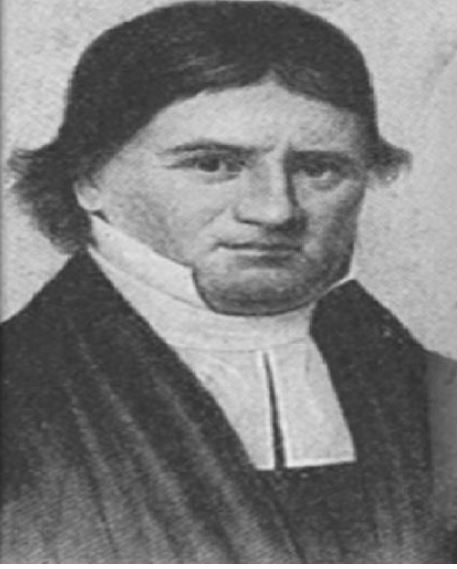
The Man on His Knees
His name rarely appears in revival history books.
When people discuss the great revivals that swept through nineteenth-century America, they usually speak about Charles Finney. They speak about packed meeting halls, transformed communities, and powerful sermons that brought conviction upon entire towns.
Few people talk about the man who arrived before Finney.
Fewer still understand that many of those remarkable revival meetings may never have happened without him.
His name was Daniel Nash, though history remembers him simply as Father Nash.
He was not a famous preacher. He did not write influential books. He never built a ministry organization. He never sought public attention.
He prayed.
And through that hidden ministry of prayer, he helped shape one of the greatest spiritual awakenings in American history.
A Life Hidden From Public View
Unlike many revival figures, very little is known about Father Nash's early life.
History records almost none of the details modern readers typically expect. There are no dramatic childhood stories. No detailed accounts of his conversion. No lengthy autobiographies.
In many ways, that absence is fitting.
The man spent his life avoiding attention.
While others pursued visible ministry, Nash embraced obscurity. While others preached publicly, he labored privately. While others stood before crowds, he knelt before God.
His calling was not to stand in front of revival.
His calling was to prepare the ground beneath it.
The Prayer Partner of Charles Finney
Father Nash is most remembered for his partnership with Charles Finney.
Whenever Finney planned meetings in a town, Nash often arrived days or even weeks before the evangelist.
He would locate a room, a cabin, a farmhouse, or sometimes a quiet place in the woods.
Then he would begin to pray.
Not casually. Not occasionally. Not as a religious routine.
He prayed with intensity.
The Hidden Engine Behind Revival
Witnesses reported hearing deep groanings and cries as Nash carried spiritual burdens before God. Some who encountered him unexpectedly were shocked by the seriousness of his intercession.
He believed revival could be prayed into existence.
Before Finney preached to people, Nash prayed for people.
Before Finney confronted sin publicly, Nash battled spiritually in secret.
He understood something many modern believers overlook:
The visible harvest is often produced by invisible labor.
What Revival Actually Costs
Every sustained move of God has a visible face and a hidden engine.
The visible face stands on the platform. The hidden engine kneels in a room somewhere, in obscurity, carrying a burden that most people would not understand and could not endure.
The Welsh Revival had Evan Roberts.
The Hebrides Revival had Duncan Campbell.
The Second Great Awakening had Charles Finney.
Yet behind each public figure stood people whose names rarely appear in history books.
Father Nash became one of the clearest examples of this principle.
He functioned as the hidden engine behind Finney's ministry.
His prayers prepared the atmosphere.
His intercession softened hearts.
His unseen labor helped create conditions where the gospel could take root.
Prayer is ministry.
What Father Nash Understood
Perhaps the most important lesson from Father Nash's life is simple.
Prayer is not preparation for ministry.
Prayer is ministry.
Modern believers often treat prayer as something that happens before the real work begins.
Father Nash saw it differently.
For him, prayer was the real work.
The preaching, conversions, and public meetings were often the visible fruit of battles already fought in secret.
This conviction transformed the way he lived.
He did not measure success by recognition.
He measured success by obedience.
He did not seek visibility.
He sought effectiveness.
The Question Father Nash Asks Us
There is a particular kind of person who finds the story of Father Nash deeply stirring.
Not merely interesting. Not merely inspiring.
Stirring.
As though something in the story is speaking directly to something in them.
Not everyone is called to stand on the platform.
Not everyone carries the gift of preaching or public ministry.
But the Kingdom has always needed men and women who will go ahead of the move of God and pray it into existence.
The unseen ones.
The ones in the woods.
The ones whose labour produces harvests they may never see from a stage.
The End of an Extraordinary Life
Father Nash died in 1831 and was buried in a small grave in upstate New York.
His gravestone sits today largely unvisited.
He left behind no books, no sermons, and no recordings.
He left behind only the fruit of what he carried — a harvest of souls that multiplied across American history and whose roots reach into eternity.
That is not a small legacy.
It may be one of the greatest legacies a human life can leave.
Lessons From Father Nash's Life
Prayer is ministry.
Prayer is not merely preparation for greater work. It is often the work itself.
Hidden faithfulness matters.
God frequently uses unseen labor to accomplish visible results.
Revival has a secret history.
Behind every public awakening stands a private story of intercession.
Recognition is not the reward.
Father Nash sought obedience rather than applause.
The Kingdom needs hidden people.
Not everyone is called to preach publicly, but everyone can participate through prayer.
Frequently Asked Questions
Who was Father Nash?
Father Nash, whose full name was Daniel Nash, was a revival intercessor best known for supporting Charles Finney through intense prayer during the Second Great Awakening.
Why was Father Nash important?
His hidden ministry of prayer helped prepare communities spiritually before Finney's revival meetings began.
Did Father Nash preach?
He occasionally ministered publicly, but he became most famous for his role as an intercessor rather than a preacher.
What can Christians learn from Father Nash?
His life demonstrates the power of hidden prayer, faithful intercession, and serving God without seeking recognition.
Where is Father Nash buried?
Father Nash is buried in upstate New York, where his grave remains a reminder of a life devoted to prayer.
Will You?
The question Father Nash's life asks every believer is not complicated.
Are you willing to do the work that no one will see, so that God can do the work that everyone will witness?
Are you willing to be the infrastructure? The hidden engine? The man or woman in the woods?
History may not record your name.
The newspapers may not mention you.
The photographs may not include you.
But the harvest may carry your fingerprints — invisibly, permanently, eternally.
Father Nash understood that.
And he counted it enough.
The question is whether we will.