
Evan Roberts: The Man Who Prayed 11 Years Before the Welsh Revival
In 1904, over one hundred thousand people gave their lives to Jesus Christ in five months. Jails emptied. Courts went quiet. An entire nation trembled before God.
At the center of it all was a twenty-six-year-old coal miner nobody had heard of — and what he carried into those chapels will confront everything we think we know about revival.
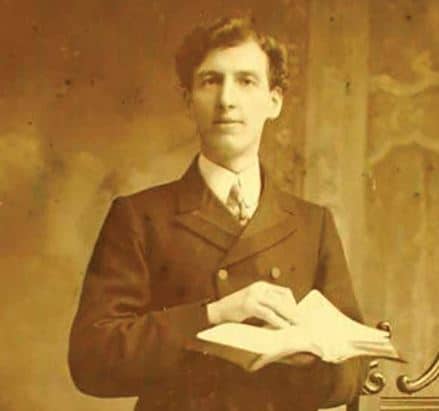
He Prayed Eleven Years Before Anyone Noticed
Evan Roberts was born in 1878 in Loughor, a small mining town in South Wales. He followed his father into the coal pit at twelve years old and worked underground for over a decade.
But something was burning inside him that the darkness could not extinguish.
For eleven years, he prayed for revival. Not occasionally — consistently, persistently, before dawn, after exhausting shifts, and in every margin of a coal miner's hard life.
He prayed for something he had never seen and had no natural reason to expect.
This is the detail the modern church rushes past because it is inconvenient.
We want the fire without the preparation. We want the anointing without the obscurity. But the depth of what God released through Evan Roberts in 1904 was directly proportional to what had been built in secret before 1904.
The eleven years were not a delay.
They were the preparation.
What Triggered the Welsh Revival
In the autumn of 1904, Evan Roberts attended a meeting where an evangelist named Seth Joshua prayed four words that broke him completely open.
Bend us, O Lord.
Evan Roberts fell to the ground. He wept. He shook. He surrendered in a way that looked, to everyone watching, like a man falling apart.
He was actually falling together.
When he stood up, he returned to his home village and asked the local pastor if he could speak to whatever young people would stay after the Monday evening service.
Seventeen people stayed.
He gave them four directives: confess every known sin, remove everything doubtful from your life, obey the Holy Spirit instantly and completely, and confess Christ publicly.
Within two weeks, the entire region was on fire.
The Four Conditions That Started Everything
Most revivals in history have been built around extraordinary preaching or dramatic miracles.
The Welsh Revival was built around four simple conditions that any believer could meet.
Confess every known sin.
Not generally. Not vaguely. Specifically. Evan Roberts believed that unconfessed sin was one of the greatest barriers between a believer and the power of God.
Remove everything doubtful from your life.
Not just what was obviously sinful — but anything that created distance between the soul and God. Entertainment, relationships, habits, ambitions. Anything that dulled spiritual hunger had to go.
Obey the Holy Spirit instantly and completely.
This condition separated Evan Roberts from many ministers of his generation. He did not plan his meetings in the conventional sense. He waited on the Spirit and moved when the Spirit moved.
Confess Christ publicly.
Not privately. Not quietly. Out loud, before others, at whatever personal cost that required.
Seventeen people said yes to those four conditions on a Monday night in Loughor.
It was enough.
Why Evan Roberts — Not Someone More Qualified?
By every classical standard, Evan Roberts was not a great preacher.
He was unstructured, unpolished, and theologically untrained.
He regularly interrupted his own messages to weep. He sometimes stood in complete silence at the front of packed chapels, waiting on the Spirit while hundreds watched.
There were meetings where he said almost nothing.
People were converted anyway.
What set Evan Roberts apart was not his gifting.
It was his availability.
Eleven years of prayer had hollowed him out until there was room inside him for something far larger than himself.
When the fire came, it found a vessel with no conditions attached — no ambition competing with God's agenda, no self-interest guarding the entrance.
The Welsh Revival did not happen because Evan Roberts was extraordinary.
It happened because he was surrendered.
The Collapse Nobody Prepared Him For
By 1905, cracks were beginning to show.
The physical and spiritual cost of carrying what Evan Roberts carried was beyond what any human frame was built to sustain.
He slept erratically.
He barely ate.
Those close to him described watching him pray as watching someone in profound suffering.
By 1906, he had withdrawn from public ministry entirely.
He was only twenty-eight years old.
The critics were swift and merciless.
Some said he had burned out.
Some dismissed the entire revival as emotionalism.
Some drew unfair conclusions about his mental state.
But Evan Roberts did not fail.
He was finished.
Those are not the same thing.
A vessel that cracks under weight it was never meant to carry has failed.
A vessel that has been completely poured out has fulfilled its purpose.
The Hidden Years
After withdrawing from public ministry, Evan Roberts spent the rest of his life in relative obscurity.
He continued praying.
He continued interceding.
He continued carrying burdens for Wales, for the Church, and for future generations.
Most people never saw those years.
History rarely celebrates hidden faithfulness.
But Roberts later reflected that those decades of prayer were just as important as the five months of public fire.
He died in 1951 at the age of seventy-two.
The man who had helped ignite one of history's most famous revivals finished his life in quietness.
There is something deeply beautiful about that.
What the Welsh Revival Teaches Us Today
The Welsh Revival began in 1904 when a surrendered, praying, broken vessel made himself fully available to God.
God moved through him in ways that defied human explanation.
The lesson is not complicated.
Revival does not come through polished people.
It comes through broken ones.
The preparation is usually hidden, slow, and uncomfortable.
The length of the preparation is often proportional to the weight of what God intends to release.
If you are in a long season of prayer with nothing visible to show for it, you are not forgotten.
You may simply be in the eleven years.
Pray the prayer that broke Evan Roberts open.
Pray it honestly.
Not as a slogan.
Not as a religious phrase.
As a genuine surrender.
Bend me, O Lord.
Then sit in it.
Let it do its full work.
The fire will fall.
It always does.
Lessons From Evan Roberts' Life
Long preparation is not wasted time.
Eleven years of prayer prepared five months that changed a nation.
Revival begins with surrender.
The breakthrough came when Roberts stopped resisting and fully yielded to God.
Obedience matters more than talent.
God used a young coal miner with no formal theological training.
Hidden prayer produces public impact.
What happened in private eventually transformed an entire nation.
God often uses broken vessels.
The people who carry revival are rarely the people the world expects.
Frequently Asked Questions
Who was Evan Roberts?
Evan Roberts was a Welsh revival leader who became closely associated with the Welsh Revival of 1904–1905.
How long did Evan Roberts pray before the revival?
According to historical accounts, he prayed consistently for revival for approximately eleven years before the Welsh Revival began.
What were the four conditions of the Welsh Revival?
Confess every known sin, remove everything doubtful, obey the Holy Spirit instantly, and confess Christ publicly.
How many people were affected by the Welsh Revival?
More than one hundred thousand people are estimated to have professed faith in Christ during the revival's most intense months.
When did Evan Roberts die?
He died in 1951 at the age of seventy-two after spending many years in relative obscurity and prayer.
Will You Pray Through Your Eleven Years?
Most people want what happened in 1904.
Few people want what happened between 1893 and 1904.
The prayer.
The waiting.
The surrender.
The hidden years.
Yet those hidden years were where the revival was truly born.
The fire that changed Wales did not begin in a chapel.
It began in the secret place.
And that is where every genuine move of God still begins today.