
Kathryn Kuhlman: The Woman Who Learned to Get Out of God’s Way
Discover the extraordinary life of Kathryn Kuhlman — the healing evangelist whose ministry became known for miracles, surrender, and a deep dependence on the Person of the Holy Spirit.
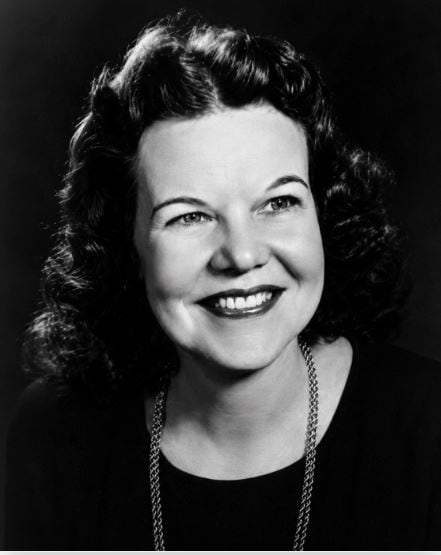
Who Was Kathryn Kuhlman?
Kathryn Kuhlman was an American evangelist whose ministry became known for miracle services, testimonies of healing, and an unusual emphasis on the Person of the Holy Spirit.
She did not present herself as a healer. In fact, she repeatedly resisted that label. Her message was not, “Look what I can do.” Her message was, “Look what the Holy Spirit can do when a life is fully yielded.”
That distinction matters. Kuhlman’s ministry was not built around technique, formula, or personality alone. It was built around surrender. The power of her story is not merely that people testified of healing in her meetings. The power of her story is that she became a vessel through surrender, brokenness, and costly obedience.
Her life is not a clean, comfortable story. It includes calling, gifting, failure, public shame, restoration, miracles, controversy, loneliness, and extraordinary fruit. That is why her story still matters.
— Kathryn Kuhlman
The Girl From Concordia
Kathryn Johanna Kuhlman was born on May 9, 1907, in Concordia, Missouri. She grew up in a small-town setting, far removed from the large auditoriums and national attention that would later define her public ministry.
From the beginning, Kathryn was not ordinary. She was expressive, dramatic, talkative, and deeply aware of the world around her. She did not fit easily into the quiet expectations placed on women in her generation.
At around fourteen years old, she experienced conversion in a Methodist church service. That encounter marked her deeply. She did not yet understand the full shape of her calling, but something had been awakened in her that would not leave.
The girl from Concordia would eventually become one of the most recognizable women ministers of the twentieth century. But the road there was not straight.
An Unlikely Call to Preach
Kathryn began travelling in ministry as a young woman, first in connection with her sister and brother-in-law’s itinerant evangelistic work. The early years were not glamorous. They involved small meetings, modest venues, uncertain support, and the hard discipline of learning ministry by doing it.
But she discovered something: she could preach.
Her voice carried weight. Her presence was unusual. Her delivery was dramatic and deeply personal. She could hold an audience, not merely with performance, but with conviction.
By the 1930s, Kathryn had established her own ministry work in Denver, Colorado, where she preached regularly and drew growing crowds. Momentum was building. Doors were opening. Her ministry appeared to be moving forward.
Then came the decision that nearly destroyed everything.
Ruthless lesson: gifting can take you somewhere your character has not yet been prepared to sustain. Kathryn Kuhlman’s life warns us that public anointing does not remove the need for private obedience.
The Marriage That Cost Her Ministry
In 1938, Kathryn married Burroughs Allen Waltrip, an evangelist whose relationship with her became one of the most painful and controversial chapters of her life.
The marriage brought public scandal, ministry collapse, and deep spiritual conflict. Supporters withdrew. Doors closed. The reputation she had built was damaged severely.
But the deepest cost was not public criticism. The deepest cost was inward. Kathryn later understood that she had chosen something God had not blessed, and the anointing she had known before seemed to lift.
That is a hard sentence, but it is the point of the story. Disobedience does not always remove gifting, but it can grieve the Spirit. It can drain the life out of public ministry until the words are still there but the weight is gone.
Kathryn had to face the question every called person eventually faces: will I protect what I want, or will I surrender fully to God?
The Death Before the Ministry
Kathryn Kuhlman’s restoration did not begin with a strategy. It began with death.
She later described a deep surrender in which she finally gave up her own will, her own way, and the thing she had clung to. She spoke of a kind of death to self — not physical death, but the death of control, reputation, romantic attachment, and self-direction.
That surrender became the turning point.
This is why the strongest interpretation of Kathryn Kuhlman’s story is not “a woman with a healing ministry.” That is too shallow. The deeper story is this: God used a vessel who had been broken, emptied, and brought to the end of herself.
— Kathryn Kuhlman
Franklin, Pennsylvania: The Hidden Rebuilding
After the collapse of her earlier ministry season, Kathryn began again in Franklin, Pennsylvania. The beginning was small. There was no large platform, no national recognition, and no guarantee that the public would trust her again.
But she kept preaching.
She did not rebuild through image management. She rebuilt through obedience. She preached, prayed, waited, and depended on God.
Slowly, the presence of God began to mark the meetings. People came not merely because Kathryn was dramatic or eloquent, but because something spiritual was happening in the room.
Reports of healing began to emerge. Testimonies spread. The ministry grew again — but this time from a deeper foundation.
Pittsburgh and the Miracle Services
Kathryn Kuhlman’s ministry became especially known through her miracle services in Pittsburgh. Crowds gathered in large numbers, many of them sick, desperate, curious, or skeptical.
Her approach was different from many healing evangelists of her era. She did not rely on a fixed formula. She did not present healing as a mechanical result of a technique. She emphasized worship, surrender, and the sovereign work of the Holy Spirit.
In her meetings, testimonies of healing often came as people sat in the atmosphere of worship and preaching. Some later reported medical confirmation of changes in their conditions.
Kathryn’s response remained consistent: she refused to take credit. She insisted that the Holy Spirit was the One doing the work.
The Holy Spirit Was Not a Force to Her
Kathryn Kuhlman’s central message was the Holy Spirit.
Not the Holy Spirit as a vague power. Not the Holy Spirit as an atmosphere. Not the Holy Spirit as a religious feeling. To Kathryn, the Holy Spirit was a Person — someone who could be loved, welcomed, grieved, honored, and obeyed.
This shaped everything about her ministry.
She was careful with the atmosphere of her meetings because she believed the Spirit could be grieved. She resisted showmanship because she believed attention belonged to God, not to the human vessel. She rejected formulas because she believed the Holy Spirit could not be controlled.
That is why her message remains necessary today. Many people want power without relationship. Kathryn Kuhlman’s life says: seek the Person, not the performance.
— Kathryn Kuhlman
Los Angeles and National Influence
By the 1960s, Kathryn’s ministry had expanded beyond Pittsburgh. Her services in Los Angeles drew large crowds, and her influence spread through books, television appearances, and wider charismatic networks.
She became one of the most recognizable Christian women of her era. But public recognition did not remove the central demand of her message: surrender.
Kathryn’s ministry crossed denominational lines. Pentecostals, charismatics, Catholics, mainline Protestants, skeptics, doctors, and ordinary seekers attended her meetings.
Her ministry helped shape later conversations about healing, the Holy Spirit, women in ministry, and the charismatic renewal.
But her influence also came with controversy, and that must be acknowledged honestly.
Controversy, Complexity, and Discernment
Kathryn Kuhlman was not a simple figure. Her life included genuine spiritual fruit and real human complexity.
Some admired her deeply. Others questioned aspects of her ministry, her style, her theology, and the claims associated with healing services. Not every reported healing was medically verified. Not every testimony could be easily assessed. Not every critic was dishonest.
A mature reading of her life must hold two truths together.
First, there are credible testimonies of people deeply impacted through her ministry. Second, healing ministry must never be handled carelessly, exaggerated irresponsibly, or used to manipulate the suffering.
This is where Fire Trail must be stronger than shallow revival content. We do not need to turn revival figures into flawless icons. The real lessons are often found when we tell the truth carefully.
Documented Healings and Medical Questions
Kathryn Kuhlman’s ministry became known for healing testimonies, and some of those testimonies were later examined by medical professionals and writers.
The important thing is to speak responsibly. Some healing claims were accompanied by medical documentation. Others were personal testimonies that require caution in how they are repeated.
Kathryn herself did not claim that everyone would be healed. She did not claim to control healing. She repeatedly placed responsibility for miracles on the sovereign work of the Holy Spirit.
That posture matters. A responsible theology of healing must leave room for mystery, compassion, and honesty. The sick should never be blamed simplistically when healing does not happen.
Kuhlman’s better legacy is not a formula for healing. It is a posture of reverence before the Holy Spirit.
The Private Cost of Public Ministry
Behind the platform was a woman who carried real loneliness, pressure, sacrifice, and human weakness.
Kathryn never remarried after her failed marriage. She gave herself completely to ministry. That decision came with cost. Public fruit does not erase private pain.
She was also known to be demanding and particular. Her public humility before God did not mean she had no human flaws. Like many highly gifted leaders, she could be difficult, intense, and exacting.
This does not cancel the lessons of her life. It sharpens them.
God does not use flawless vessels. But He does require surrendered ones.
Why Kathryn Kuhlman Still Matters Today
Kathryn Kuhlman still matters because the modern Church is full of spiritual performance but often thin on surrender.
We know how to create atmosphere. We know how to produce content. We know how to livestream, brand, edit, package, and promote. But none of those things can replace the presence of the Holy Spirit.
Kathryn’s life asks hard questions:
- Am I seeking the Holy Spirit, or merely the effects associated with Him?
- Have I surrendered the thing God has been asking me to release?
- Am I trying to manufacture what only God can do?
- Do I want power more than purity?
- Would I still obey God if obedience cost me reputation, comfort, and control?
These questions are uncomfortable because they reach past public Christianity into the private altar.
Famous Kathryn Kuhlman Quotes
- “I believe in miracles because I believe in God.”
- “One day I died. And when I died, He came.”
- “I am not a healer. I am just a servant of the One who heals.”
- “The Holy Spirit is a Person.”
- “God is looking for people who will get out of His way.”
- “The greatest miracle is the transformation of a human soul.”
Lessons From Kathryn Kuhlman’s Life
1. Surrender is deeper than gifting.
Kathryn’s gift was visible early, but her greatest fruit came after deep surrender.
2. The Holy Spirit cannot be reduced to a formula.
Her ministry resisted mechanical explanations of healing and pointed people back to the Person of the Spirit.
3. Public ministry cannot outrun private obedience.
Her painful season shows that calling does not cancel the need for obedience.
4. Brokenness can become a doorway.
Her greatest fruit came after failure, loss, and surrender.
5. Healing ministry must be handled with reverence.
The suffering should never be manipulated, blamed, or used as props for spiritual performance.
Frequently Asked Questions
Who was Kathryn Kuhlman?
Kathryn Kuhlman was an American evangelist and author known for miracle services, healing testimonies, and her strong emphasis on the Person and work of the Holy Spirit.
What was Kathryn Kuhlman best known for?
She was best known for large miracle services in Pittsburgh and Los Angeles, where many people testified of healing and spiritual transformation.
Did Kathryn Kuhlman call herself a healer?
No. She consistently rejected the idea that she personally healed people. She attributed healing to the Holy Spirit.
What was Kathryn Kuhlman’s message about the Holy Spirit?
She taught that the Holy Spirit is a Person who can be known, loved, honored, grieved, and obeyed.
Why is Kathryn Kuhlman controversial?
Her life included a failed marriage, public criticism, and debates around healing claims. A responsible reading of her legacy should acknowledge both the fruit and the complexity.
When did Kathryn Kuhlman die?
Kathryn Kuhlman died on February 20, 1976, in Tulsa, Oklahoma, following heart-related illness and surgery.
Recommended Book
To go deeper into Kathryn Kuhlman’s life, ministry, and message, begin here:
Disclosure: As an Amazon Associate, Fire Trail may earn from qualifying purchases.
Final Reflection: Get Out of God’s Way
Kathryn Kuhlman’s life leaves the Church with a question deeper than healing.
What would God do through a life that truly surrendered?
Not partially. Not publicly. Not when convenient. Truly.
Her story is not an invitation to imitate her style, her voice, her platform, or her methods. That would miss the point completely.
The point is surrender.
The point is the Holy Spirit.
The point is dying to the self-life that keeps trying to control what only God can do.
Kathryn Kuhlman’s legacy is not merely that miracles happened. Her legacy is the reminder that God still looks for vessels who will get out of His way.