
Charles Finney: The Lawyer Who Preached Revival Like a Verdict
Discover the remarkable story of Charles Grandison Finney — the frontier lawyer turned revivalist whose dramatic conversion, prayer-fuelled preaching, and uncompromising call to repentance helped shape the Second Great Awakening.
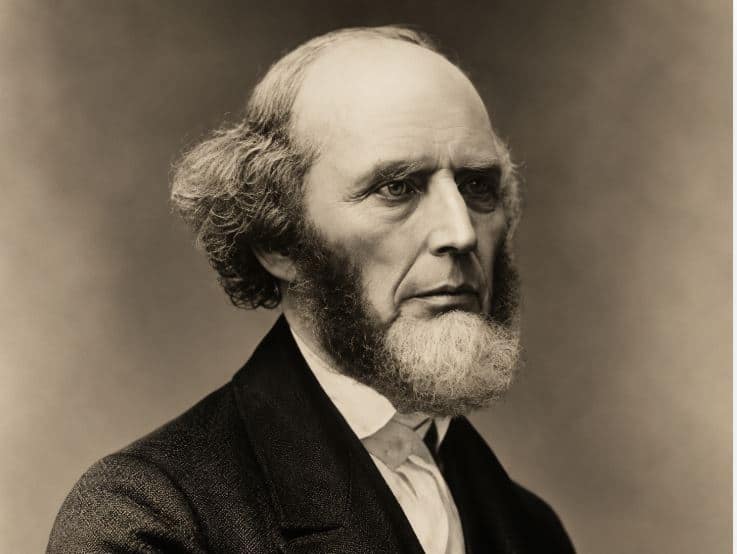
Who Was Charles Finney?
Charles Grandison Finney was an American revivalist, theologian, educator, and former lawyer who became one of the most influential Christian figures of the nineteenth century. He is often called the father of modern revivalism because his preaching, methods, and theology shaped the way many evangelicals came to understand revival.
Finney was not a polished seminary graduate. He was not raised in a deeply religious environment. He was a lawyer from the American frontier whose legal mind had been trained to examine evidence, press arguments, and demand a verdict.
When that mind was surrendered to Christ, it became a weapon in the hands of God.
Finney preached with the force of a courtroom advocate. He did not speak as though religion were a decoration for respectable people. He preached as though eternity was real, sin was deadly, repentance was urgent, and men and women had to respond to God now.
— Charles Finney
From Frontier Lawyer to Convicted Soul
Charles Finney was born on August 29, 1792, in Warren, Connecticut. He grew up in the expanding frontier world of early America, where life was hard, formal religious instruction was limited, and ambition often mattered more than spiritual formation.
As a young man, Finney studied law in Adams, New York. His legal training sharpened his intellect and formed the argumentative style that later marked his preaching. He learned to build a case, expose contradictions, and press people toward decision.
But while studying law, Finney kept encountering references to biblical principles. He began reading the Bible, at first partly from intellectual curiosity. The more he read, the more unsettled he became.
The Bible did not merely inform him. It accused him. It forced him to confront the state of his own soul.
Ruthless lesson: Finney’s conversion did not begin with emotion. It began when truth cornered him. Many people want spiritual comfort without spiritual confrontation. Finney’s life reminds us that real conversion often starts when the excuses collapse.
The Conversion That Ended His Legal Career
In October 1821, Finney reached a point of inner crisis. He could no longer avoid the question of his standing before God. On October 10, he went into the woods near Adams, New York, determined to settle the matter of his soul.
Alone among the trees, he wrestled with God. His greatest battle was not intellectual doubt. It was pride. He feared what others would think if he became publicly religious. He feared appearing weak, emotional, or foolish.
But pride eventually broke.
Finney surrendered to Christ. Later that evening, he described an overwhelming encounter with the love and presence of God. The experience was so powerful that it marked him for the rest of his life.
The next day, when a legal client came to see him, Finney famously replied that he had a retainer from the Lord Jesus Christ and could no longer plead the client’s case.
The lawyer had become a preacher.
— Charles Finney
The Prayer Behind the Preaching
The public story of Charles Finney is usually told through his preaching. But the hidden story is prayer.
Finney understood that sermons alone did not create revival. Words could be logical, forceful, and persuasive, but without the power of the Holy Spirit, preaching became religious argument instead of spiritual awakening.
This is where Daniel Nash — often called Father Nash — becomes crucial.
Nash was Finney’s prayer partner and intercessor. Before Finney arrived in a town to preach, Nash would often go ahead and pray. He did not seek attention. He did not build a platform. He carried the hidden burden.
In room after room, often away from public view, Nash and other intercessors would cry out to God for conviction, repentance, and revival.
This matters. The visible fire of Finney’s preaching was prepared by invisible intercession.
Father Nash: The Hidden Man Behind the Revival
Father Nash’s role exposes one of the most dangerous myths in ministry: that public fruit is mainly produced by public gifting.
Finney was undoubtedly gifted. He had a brilliant mind, a commanding presence, and a preaching style that could shake a room. But even Finney recognized that revival did not rest on eloquence alone.
Nash’s intercession went before the meetings like a plow breaking hard ground. He prayed until the atmosphere shifted. He prayed until conviction came. He prayed until the preaching could land in hearts that had been softened by God.
When Father Nash died in 1833, Finney’s most explosive revival season began to decline. That fact should disturb anyone who thinks prayer is optional.
— Charles Finney
The Rochester Revival
One of the most significant chapters in Finney’s ministry was the Rochester Revival of 1830–1831.
Rochester, New York, was growing rapidly at the time. It was prosperous, ambitious, and morally troubled. Alcohol abuse, crime, spiritual indifference, and social disorder were serious issues.
Finney began preaching there, and what followed became one of the most documented revivals in American history.
The impact reached beyond church attendance. Reports described changed households, reduced crime, declining business in taverns, restored relationships, and deep spiritual seriousness spreading through the community.
This is what made Finney’s revivals so important. They were not merely meetings where people felt stirred. They affected the moral life of towns and cities.
The gospel moved from the pulpit into the streets.
Finney’s Theology of Revival
Finney’s theology of revival was controversial, and it still creates debate today.
Many in his time believed revival was almost entirely unpredictable — a sovereign act of God that the Church could only wait for. Finney agreed that revival depended on God, but he insisted that God had revealed conditions connected to revival.
His argument was simple: if believers pray, repent, remove what grieves the Holy Spirit, and preach truth clearly, they place themselves in the conditions where God has historically moved.
That is what he meant when he said revival is no more a miracle than a crop of wheat. A farmer cannot create life in the seed, but he can plow, plant, water, and cooperate with the laws God has established.
Finney believed the Church had a responsibility to prepare the ground.
The New Measures
Finney became known for what critics called the “New Measures.”
These included public invitations, direct calls to repentance, the anxious bench, praying for individuals by name, allowing women to pray publicly in certain meetings, and preaching with urgent directness.
His methods were controversial. Some believed they were too emotional or too forceful. Others believed they were necessary because sleepy religion needed to be confronted.
Here is the uncomfortable truth: methods can be abused, but cowardice can also hide behind “order.” Finney refused to let people sit comfortably under truth without being pressed toward response.
His preaching did not ask people to admire doctrine. It demanded that they obey God.
Oberlin and the Social Cost of Revival
Finney later became deeply connected with Oberlin College in Ohio, where he served as professor and later president.
Oberlin was known for its radical commitments in education and social reform. It admitted Black students and women at a time when such decisions were controversial and costly.
Finney’s revival theology was not disconnected from social issues. He believed genuine Christianity had public consequences. If a person had truly encountered God, that encounter would affect how they treated the poor, the oppressed, the enslaved, and the marginalized.
Finney was a committed abolitionist. He opposed slavery and connected his moral vision to the gospel he preached.
In Finney’s world, revival was not merely about crowded meetings. It was about obedience to God in every area of life.
His Books and Written Legacy
Finney’s written works continue to influence revival thinking. His most important writings include:
- Lectures on Revival of Religion — his classic teaching on the conditions and principles of revival.
- Memoirs of Charles G. Finney — his personal account of conversion, ministry, and revival experiences.
- Systematic Theology — his major theological work.
- Lectures to Professing Christians — direct addresses challenging believers to live what they claim to believe.
These writings are not soft devotional material. They press the conscience. They challenge shallow belief. They expose religious passivity.
Finney wrote like a man who believed the Church had no excuse to remain powerless.
Why Charles Finney Still Matters Today
Charles Finney still matters because the modern Church is often drowning in activity but starving for conviction.
We have platforms, livestreams, social media pages, conferences, branding, and religious content everywhere. But activity is not revival. Visibility is not authority. Engagement is not transformation.
Finney asks hard questions:
- Are we preaching for response or merely for approval?
- Are we praying until the atmosphere changes?
- Are we willing to confront sin clearly?
- Do we believe revival has conditions?
- Are we prepared to obey God publicly, even when it costs us socially?
His life is not a comfortable model, but it is a necessary one.
Famous Charles Finney Quotes
- “Revival is no more a miracle than a crop of wheat.”
- “Unless I had the spirit of prayer, I could do nothing.”
- “A revival is nothing else than a new beginning of obedience to God.”
- “I have a retainer from the Lord Jesus Christ to plead His cause.”
- “Prevailing prayer is that which secures an answer.”
- “You need not look for revival unless you are willing to have it at any cost.”
Lessons From Charles Finney’s Life
1. God can use the unlikely.
A frontier lawyer with no formal seminary training became one of the most influential revivalists in American history.
2. Pride must die before true usefulness begins.
Finney’s crisis was not merely intellectual. It was the death of reputation, self-protection, and control.
3. Revival requires conditions.
Finney believed prayer, repentance, holiness, and clear preaching prepared the ground for God’s visitation.
4. Hidden intercession fuels public power.
Father Nash’s role shows that the people history forgets may be the people heaven remembers most.
5. The gospel must reshape public life.
Finney’s abolitionism shows that revival cannot be separated from obedience, justice, and human dignity.
Frequently Asked Questions
Who was Charles Finney?
Charles Grandison Finney was an American revivalist, theologian, educator, and former lawyer who became a central figure in the Second Great Awakening.
Why is Charles Finney called the father of modern revivalism?
He is called the father of modern revivalism because his preaching methods, revival theology, and public invitations strongly shaped later evangelical revival practice.
What was Charles Finney’s conversion experience?
In 1821, Finney went into the woods near Adams, New York, wrestling with God about the condition of his soul. After surrendering to Christ, he experienced a powerful encounter with God that changed the direction of his life.
Who was Father Nash?
Father Nash, whose name was Daniel Nash, was Finney’s prayer partner and intercessor. He often prayed ahead of Finney’s meetings, preparing the spiritual ground before the preaching began.
What was the Rochester Revival?
The Rochester Revival of 1830–1831 was one of the most significant revivals connected to Finney’s ministry, known for widespread conversions and visible moral change in the city.
Was Charles Finney an abolitionist?
Yes. Finney opposed slavery and was connected with Oberlin College, an institution known for admitting Black students and women during a period when that was highly controversial.
When did Charles Finney die?
Charles Finney died on August 16, 1875, in Oberlin, Ohio, at the age of 82.
Recommended Book
To go deeper into Charles Finney’s revival teaching and legacy, begin here:
Disclosure: As an Amazon Associate, Fire Trail may earn from qualifying purchases.
Final Reflection: Revival Is Not an Accident
Charles Finney’s life leaves the Church with an uncomfortable challenge.
Stop blaming the times. Stop blaming the culture. Stop blaming the world. Finney would drag the question back to the Church.
Are we praying? Are we repenting? Are we preaching truth? Are we removing what grieves the Spirit? Are we willing to obey God at any cost?
Finney did not believe revival was a religious accident. He believed God moved when His people met the conditions He had already revealed.
That means the question is not only, “Will God send revival?”
The question is also, “Will we prepare the ground?”