
Smith Wigglesworth: The Plumber Who Became the Apostle of Faith
Discover the remarkable story of Smith Wigglesworth — the Yorkshire plumber whose life of prayer, Scripture, bold faith, and radical obedience made him one of the most unforgettable healing evangelists of the twentieth century.
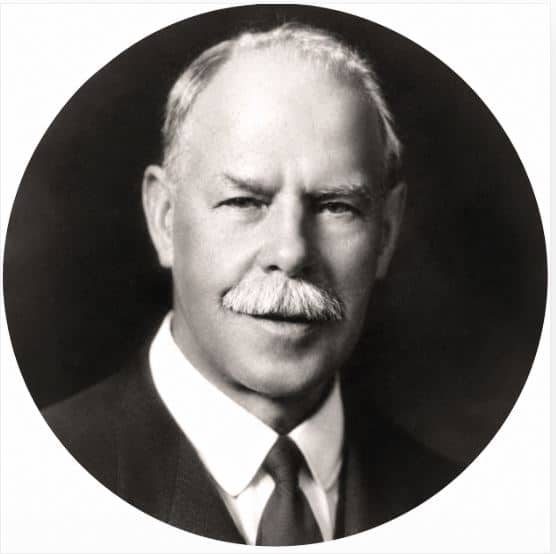
Who Was Smith Wigglesworth?
Smith Wigglesworth was a British Pentecostal evangelist, healing minister, and one of the most influential voices of early twentieth-century revival Christianity.
He became known around the world as the Apostle of Faith, not because he had natural advantages, formal theological training, or polished public speaking ability, but because he lived with a fierce confidence in God’s Word.
His story is one of the most unlikely in revival history. He was a Yorkshire plumber. He came from poverty. He had little education. For much of his early life, he could not read. Yet God used him to preach across nations, pray for the sick, stir faith in believers, and leave behind a testimony that still challenges the Church.
Wigglesworth’s life forces a question modern believers often avoid: what can God do through a person who takes Him seriously?
— Smith Wigglesworth
A Poor Boy From Yorkshire
Smith Wigglesworth was born on June 10, 1859, in Menston, Yorkshire, England. His early life was marked by poverty, hard work, and limited opportunity.
As a child, he worked long hours to help support his family. He laboured on farms and later in mills, growing up in a working-class world where survival often mattered more than education.
Nothing about his beginning suggested international ministry. He had no platform, no academic background, no wealthy sponsors, and no visible path to influence.
But revival history repeatedly proves that God is not limited by the materials men would choose. God often takes what the world overlooks and puts His fire on it.
Ruthless lesson: many people delay obedience because they think they lack the right background. Wigglesworth had almost none of the qualifications people chase today. What he had was surrender, faith, and hunger for God.
Polly Wigglesworth: The Woman Who Shaped the Apostle of Faith
One of the most important people in Smith Wigglesworth’s life was his wife, Mary Jane “Polly” Wigglesworth.
Polly was spiritually strong, deeply committed to Christ, and active in ministry before Smith became the man history remembers. She loved Scripture, prayer, evangelism, and service.
When they married in 1882, Polly’s spiritual life often exceeded Smith’s. She was the steadier influence. She was the one who helped form him. She was also the person who taught him to read — using the Bible itself as his textbook.
That detail is important. The man who would later become famous for saying, “I don’t often read books, but I read the Book,” first learned to read from the Scriptures.
Wigglesworth’s ministry cannot be understood without Polly. Hidden formation often happens through people history mentions too quickly.
Learning to Live in the Word
Wigglesworth’s relationship with the Bible became one of the defining marks of his life.
He did not treat Scripture as religious information. He treated it as living truth. He read it, believed it, prayed it, spoke it, and acted on it.
His faith was not built on emotional excitement. It was built on the Word of God becoming more real to him than circumstances, symptoms, fear, or public opinion.
This is why his ministry could appear extreme to cautious observers. Wigglesworth did not merely agree with biblical promises. He acted as though they were true.
— Smith Wigglesworth
A Life of Continuous Prayer
Wigglesworth’s prayer life is often summarized in one famous line: he did not pray for more than twenty minutes, but he never went more than twenty minutes without praying.
That statement reveals his entire spiritual rhythm.
Prayer for Wigglesworth was not merely an event scheduled into the day. It was an atmosphere. It was a continuous turning of the heart toward God.
He lived in communion with God while working, travelling, preaching, resting, and ministering. This did not make him passive. It made him alert. He carried an inward awareness of God into ordinary moments and public ministry alike.
Modern believers often treat prayer as a task to complete. Wigglesworth treated prayer as spiritual breathing.
The Baptism of the Holy Spirit
Smith Wigglesworth’s ministry changed significantly after he encountered the Pentecostal message and received the baptism of the Holy Spirit.
Before that season, he already loved God and had seen fruit in ministry. But afterward, his boldness, authority, and public ministry entered a new dimension.
For Wigglesworth, the Holy Spirit was not a doctrine to debate from a distance. The Spirit was the power of God for witness, holiness, healing, and obedience.
This experience helped shape the ministry that later became known across continents. His preaching became marked by urgency. His prayers for the sick became marked by authority. His faith became almost impossible to separate from action.
Faith That Acted
Wigglesworth’s faith was not theoretical. It moved.
He believed that faith without corresponding action easily becomes religious language. He expected obedience to follow belief.
This is one reason stories about his ministry can sound startling. He was forceful, direct, and sometimes difficult for modern readers to understand. His methods were not always gentle by contemporary standards.
A responsible reading of Wigglesworth must avoid two errors. Do not turn every method he used into a model to copy. But do not dismiss the spiritual authority behind his life simply because his personality was severe.
The deeper issue is not imitation of mannerisms. The deeper issue is whether our faith has any action attached to it.
Important balance: Wigglesworth’s boldness should not be used as an excuse for harshness, spiritual pride, or careless ministry to suffering people. His faith challenges unbelief, but healing ministry must always carry compassion and wisdom.
Healing Ministry and the Apostle of Faith
Smith Wigglesworth became widely known for praying for the sick. Many testimonies of healing were connected to his ministry, and his meetings drew people hungry for both salvation and divine intervention.
He believed Jesus Christ was the same yesterday, today, and forever. He believed the promises of Scripture were not decorative. They were meant to be trusted and acted upon.
Yet the best way to understand Wigglesworth is not merely as a “healing evangelist.” He was a man of faith. Healing was one expression of a larger conviction: that God’s Word is true and that believers are called to live accordingly.
He did not separate faith from holiness, prayer, Scripture, obedience, and surrender. To him, the life of faith demanded the whole person.
His Preaching Across the Nations
As his ministry grew, Wigglesworth travelled widely, preaching in Britain, Europe, America, Australia, New Zealand, South Africa, and other regions.
He was not a polished orator in the academic sense. His power was not in refined rhetoric. His power was in conviction.
People did not attend his meetings to hear elegant lectures. They came because there was a sense that this man believed what he preached.
That is rare. Many people can explain faith. Fewer embody it.
His Personality and the Need for Discernment
Wigglesworth was bold, forceful, and sometimes severe. He could be blunt in speech and direct in ministry.
Some of that directness came from faith. Some of it reflected his working-class background and personality. A mature reading of his life must not romanticize every rough edge.
Revival history is not helped by turning leaders into flawless icons. The point is not that Wigglesworth was perfect. The point is that he was surrendered and usable.
God uses real people, not polished statues.
Why Smith Wigglesworth Still Matters Today
Smith Wigglesworth still matters because the modern Church often knows how to discuss faith without actually living by it.
We have access to more sermons, books, podcasts, study tools, and online teaching than any generation before us. Yet access to information has not automatically produced obedience.
Wigglesworth confronts that gap.
He did not have our resources. But he had fire. He had the Word. He had prayer. He had obedience. He had a refusal to treat God’s promises as theory.
His life asks hard questions:
- Do I read Scripture for information or transformation?
- Is my prayer life an appointment or an atmosphere?
- Do I believe God’s promises enough to act on them?
- Have I confused biblical caution with unbelief?
- Do I want the results of faith without the obedience of faith?
Famous Smith Wigglesworth Quotes
- “I don’t pray for more than twenty minutes — but I never go more than twenty minutes without praying.”
- “I don’t often read books, but I read the Book.”
- “You can’t keep a man down who prays.”
- “Great faith is the product of great fights.”
- “The Word of God is not to be played with. It is to be lived.”
- “God is not looking for great men. He is looking for men He can make great.”
Lessons From Smith Wigglesworth’s Life
1. Ordinary people can be used powerfully.
A poor Yorkshire plumber became one of the most remembered revival figures of the twentieth century.
2. Scripture must be lived, not merely studied.
Wigglesworth did not approach the Bible as theory. He treated it as truth to obey.
3. Prayer is meant to become continuous communion.
His life shows that prayer can become the atmosphere of the believer’s day.
4. Spiritual formation often happens through hidden people.
Polly Wigglesworth played a foundational role in shaping the man later known as the Apostle of Faith.
5. Boldness must be governed by compassion.
His courage challenges unbelief, but modern ministry must also learn to handle suffering people with wisdom and tenderness.
Frequently Asked Questions
Who was Smith Wigglesworth?
Smith Wigglesworth was a British Pentecostal evangelist and healing minister known as the Apostle of Faith.
Why was Smith Wigglesworth called the Apostle of Faith?
He became known by that title because of his bold confidence in God’s Word, his emphasis on prayer, and the healing testimonies associated with his ministry.
Could Smith Wigglesworth read?
Not at first. His wife, Polly, taught him to read using the Bible.
What was Smith Wigglesworth’s prayer life like?
He practiced continuous communion with God and famously said that he did not pray for more than twenty minutes, but he never went more than twenty minutes without praying.
What did Smith Wigglesworth believe about healing?
He believed divine healing was available through faith in Jesus Christ and prayed boldly for the sick throughout his ministry.
When did Smith Wigglesworth die?
Smith Wigglesworth died on March 12, 1947, at the age of 87.
Recommended Book
To go deeper into Smith Wigglesworth’s life, faith, and teachings, begin here:
Disclosure: As an Amazon Associate, Fire Trail may earn from qualifying purchases.
Final Reflection: Faith Must Become Obedience
Smith Wigglesworth’s life leaves the Church with a simple but uncomfortable challenge:
Stop admiring faith from a distance.
Faith is not merely something to quote, discuss, post, or defend. Faith must be obeyed.
Wigglesworth was not impressive because he had every natural advantage. He was impressive because he took God seriously.
He believed the Word. He prayed continually. He obeyed quickly. He refused to let ordinary limitations define what God could do through a surrendered life.
His story is not an invitation to copy his personality. It is a summons to recover the kind of Christianity that believes God enough to act.