
Jonathan Goforth: The Missionary Who Prayed Down Revival Across China
Discover how a Canadian missionary and his wife, Rosalind, persevered through opposition, suffering and loss—and how the revival in Manchuria in 1908 deepened Goforth's conviction that the Church must depend on the Holy Spirit.
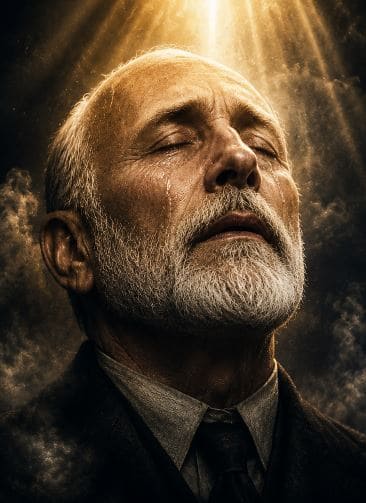
Who Was Jonathan Goforth?
Jonathan Goforth (1859–1936) was a Canadian Presbyterian missionary whose name became closely associated with revival in China, particularly the Manchurian Revival of 1908. He spent much of his life preaching the gospel, planting and strengthening Christian communities, and calling believers to repentance, prayer and dependence upon the Holy Spirit.
His ministry cannot be understood apart from Rosalind Goforth, his wife and fellow missionary. Together they faced language barriers, political unrest, the loss of children, displacement and the everyday demands of missionary service. Their story is not one of uninterrupted triumph. It is a record of costly obedience sustained through difficult years.
Goforth's lasting significance lies not in a spectacular conversion statistic or the idea that one man transformed an entire nation. It lies in the testimony of a missionary who saw that human effort, however sincere, cannot produce spiritual life. His experience of revival intensified his confidence in the Holy Spirit's power to convict, restore and renew.
Central lesson: Revival is not manufactured by human ingenuity. Prayer, the preaching of Christ, repentance and obedience prepare believers to respond to the work of the Holy Spirit.
Early Life: A Call That Would Not Let Him Go
Jonathan Goforth was born on 10 February 1859 in Ontario, Canada. Raised in a farming family, he grew up in a setting where work demanded perseverance and responsibility. His Christian calling developed during his youth, and the missionary example of Robert Murray M'Cheyne and the influence of Christian leaders helped direct his attention towards overseas service.
Goforth studied at Knox College in Toronto and became convinced that he should take the gospel to China. At a time when overseas missionary work involved considerable personal risk, his decision required more than enthusiasm. He had to prepare for unfamiliar languages, customs and living conditions while depending on the support of the Church that sent him.
In 1887, Jonathan married Rosalind Bell-Smith. The following year they left Canada for China under the auspices of the Canadian Presbyterian mission. Their work began in northern China, where the need for language learning and patient relationship-building quickly confronted any romantic ideas about missionary life.
Missionary Work in China: Faithfulness Before Recognition
The Goforths' early years involved the ordinary and demanding work of mission: learning Chinese, travelling, preaching, visiting households, teaching and building relationships with local believers. Their ministry was not simply a succession of extraordinary meetings. Much of it depended on the steady labour of establishing Christian witness where the gospel was unfamiliar or resisted.
Goforth was an evangelist as well as a man of prayer. He preached publicly and worked within an organised missionary structure. This distinction matters: his later emphasis on the Holy Spirit was not a rejection of preaching, teaching or the local Church. Rather, he came to see that these activities needed divine power if they were to bear lasting spiritual fruit.
Rosalind's account of their years in China also reveals the personal cost of their calling. The couple experienced bereavement and the strain of raising a family amid uncertainty. Their endurance should not be reduced to a formula in which faith guarantees an easy or visibly successful life.
The Boxer Rebellion: Mission in the Shadow of Violence
In 1900, the Boxer Rebellion brought severe danger to Chinese Christians and foreign missionaries. Anti-foreign and anti-Christian violence spread across parts of northern China. The Goforth family fled during the crisis and survived a perilous journey.
The events of this period exposed the vulnerability of missionaries and, even more importantly, the suffering of Chinese Christians who could not simply leave their homes. Any responsible account of the mission must remember the local believers whose faith and sacrifice were central to the history of Christianity in China.
For the Goforths, survival did not erase grief or danger. Their return to missionary service reflected a continuing conviction that their calling had not ended. Yet their story also reminds us that revival history is inseparable from the real social and political circumstances in which believers lived.
The Road to Revival: Learning to Depend on the Holy Spirit
In the years that followed, Goforth became increasingly interested in accounts of spiritual awakening. Reports of the Welsh Revival of 1904–1905 and the Korean Revival of 1907 were particularly influential. They challenged him to consider afresh the relationship between prayer, confession of sin and the Holy Spirit's work in the Church.
He was not searching merely for larger audiences or more impressive meetings. He wanted to see believers restored to genuine fellowship with God and unbelievers confronted by the claims of Christ. In his later book By My Spirit, he reflected on revival as something that could not be explained adequately by the personality or ability of the preacher.
— Zechariah 4:6 (KJV)
This Scripture provides a fitting summary of Goforth's developing conviction. Human preparation matters, but the Church cannot substitute organisation, persuasive speech or emotional excitement for the work of the Spirit.
The Manchurian Revival of 1908
In 1908, Goforth conducted a series of meetings in Manchuria that became associated with a remarkable movement of confession, repentance and spiritual renewal. Reports from the meetings describe believers openly acknowledging wrongdoing, seeking reconciliation and responding with unusual seriousness to the preaching of God's Word.
The movement was not simply about the number of people who attended. Its distinctive feature was the depth of conviction reported among Christians, including people already active in church life. Hidden grievances, dishonesty and other sins were brought into the light, and many sought to make matters right.
These meetings took place within a broader history of Christian work in China. Chinese pastors, evangelists and congregations were essential participants, and the revival should not be portrayed as the achievement of one foreign missionary. Nor should it be confused with a claim that every village in China experienced the same awakening.
Why Confession Mattered
Accounts of the revival frequently emphasise confession. For Goforth, revival was not an occasion to celebrate religious excitement while leaving the inner life untouched. The test of spiritual awakening included a changed response to sin and a renewed willingness to obey God.
That emphasis remains challenging. A congregation can have meetings, music and impressive activity while unresolved bitterness or dishonesty persists. Revival calls people beyond outward appearance into truthfulness before God and one another.
Ruthless lesson: The measure of revival is not how dramatic a meeting appears, but whether people turn from sin, are reconciled, and continue in faithful obedience after the meeting ends.
Prayer, Preaching and the Work of the Spirit
Goforth is sometimes remembered as though he abandoned preaching and simply waited for miracles. That picture is inaccurate. He remained a missionary preacher and evangelist. What changed was his understanding of dependence: prayer was not an introductory formality, and preaching was not sufficient merely because it was well prepared.
He believed that the Holy Spirit must bring conviction and illuminate the truth being proclaimed. This conviction did not make the human messenger irrelevant. It placed the messenger in a posture of humility and dependence.
There is a lesson here for every generation of Christian ministry. Planning, scholarship, communication and organisation are useful servants, but they are poor substitutes for communion with God. The Church needs both fidelity to Scripture and genuine spiritual life.
Rosalind Goforth: A Partner in the Calling
Rosalind's contribution deserves more than a passing mention. She shared the sacrifices of missionary life, cared for their family through instability and bereavement, and wrote about God's faithfulness amid practical need and hardship. Her books, including How I Know God Answers Prayer and Goforth of China, remain important sources for understanding the family and its ministry.
Remembering Rosalind also corrects the tendency to tell revival history as a sequence of exceptional men acting alone. Missionary work depended on families, local Christians, translators, congregations and many people whose names are less widely remembered.
Later Ministry and Lasting Influence
Goforth continued ministering after the Manchurian Revival, travelling, preaching and speaking about the need for spiritual renewal. In later life he served in China despite declining eyesight and other difficulties. He died on 8 October 1936 in Canada.
His writings helped carry his testimony beyond the places where he had preached. By My Spirit remains especially important because it records his understanding of revival and his experiences in the meetings associated with it.
His legacy should be described carefully. The growth of Christianity in China has involved many generations of Chinese believers, churches and evangelists working through dramatically different political periods. Goforth played a part in that history, but the entire modern Chinese Church cannot be attributed to his ministry.
What Jonathan Goforth's Life Teaches Us
1. Obedience may be costly.
The Goforths' calling took them far from home and exposed them to hardship. Faithfulness should not be measured only by comfort or immediate results.
2. Prayer is dependence, not a technique.
Prayer is not a mechanism for manufacturing revival. It is an expression of trust in the God who alone gives spiritual life.
3. Repentance is central to renewal.
The Manchurian meetings were remembered not merely for strong emotions, but for confession, reconciliation and changed conduct.
4. Preaching and spiritual power belong together.
Goforth did not set the Word of God against the Spirit of God. He longed for biblical truth to be proclaimed with spiritual conviction.
5. Revival is larger than one personality.
Chinese believers and many other missionaries participated in the work. The glory belongs to God, not to the best-known name in the historical account.
Frequently Asked Questions
Who was Jonathan Goforth?
Jonathan Goforth was a Canadian Presbyterian missionary and evangelist who served in China and became particularly associated with the Manchurian Revival of 1908.
When did Jonathan Goforth live?
He was born on 10 February 1859 and died on 8 October 1936.
What was the Manchurian Revival?
It was a movement of spiritual renewal associated with meetings in Manchuria in 1908, marked in contemporary accounts by confession of sin, repentance and renewed commitment among believers.
Did Jonathan Goforth convert 300,000 people?
The figure of 300,000 is sometimes repeated in popular accounts, but it should not be presented as a verified tally of conversions resulting directly from his ministry without a dependable source and clear methodology.
Did Goforth only pray, rather than preach?
No. He was an active missionary preacher and evangelist. His emphasis on prayer expressed his conviction that the Holy Spirit must empower the work of preaching and ministry.
What books did Jonathan and Rosalind Goforth write?
Jonathan Goforth is known for By My Spirit. Rosalind wrote Goforth of China and How I Know God Answers Prayer, among other works.
Historical Sources and Further Reading
- Jonathan Goforth, By My Spirit — his account of revival and the work of the Holy Spirit.
- Rosalind Goforth, Goforth of China — a biographical account of Jonathan Goforth and their missionary years.
- Rosalind Goforth, How I Know God Answers Prayer — reflections on prayer and the family's missionary experiences.
Editorial note: This article distinguishes documented biographical information from spiritual interpretation. Precise conversion totals and dramatic dialogue from unsourced retellings have been omitted.
Final Reflection: Will We Seek God?
Jonathan Goforth's life does not offer a shortcut to revival. It offers a challenge to examine what we trust. Are we relying on the appearance of activity, or are we genuinely dependent upon the Lord? Are we willing to confess sin and obey Scripture, or do we only want the excitement associated with spiritual awakening?
The Church needs faithful preaching. It needs people willing to labour, teach and serve. But above all, it needs the Holy Spirit. Goforth's testimony directs us beyond the preacher to the God who brings conviction and gives life.
The question his story leaves with us is not whether we can reproduce the meetings of 1908. It is whether we will humble ourselves, seek God and respond when He speaks.