
Samuel Chadwick: The Preacher Who Believed Prayer Was the Church's Greatest Weapon
The Methodist preacher and teacher who called the Church back to prayer, holiness and dependence on the Holy Spirit.
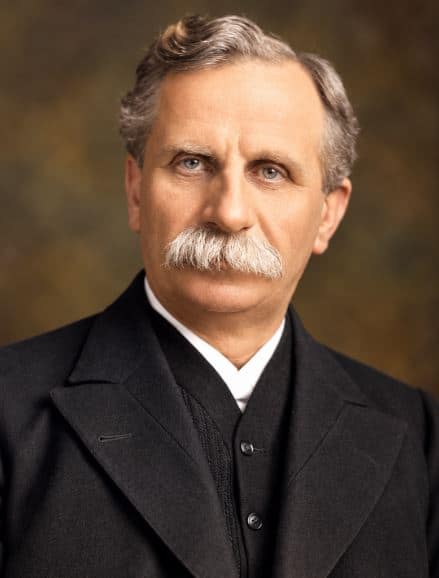
Who Was Samuel Chadwick?
Samuel Chadwick (1860–1932) was a British Wesleyan Methodist minister, evangelist, author and principal of Cliff College. He became especially influential through his teaching on prayer, holiness and the work of the Holy Spirit. His books The Path of Prayer and The Way to Pentecost have continued to challenge Christians long after his death.
Chadwick believed that the Church could possess sound organisation and persuasive preaching while remaining spiritually ineffective if it neglected prayer. For him, dependence on the Holy Spirit was not an optional addition to Christian ministry but essential to its life and power.
His legacy is therefore not the story of a single spectacular revival meeting. It is the story of a preacher and teacher who spent decades calling the Church to seek God earnestly.
Early Life and Conversion
Chadwick was born on 16 September 1860 in Lancashire, England, and grew up in a working-class Methodist setting. His early life was shaped by the religious culture of northern England and by the opportunities and limitations of an industrial society.
He came to Christian faith while still young and began preaching in his teenage years. His early ministry developed within Methodism, a tradition that placed considerable emphasis on conversion, practical holiness, evangelism and disciplined Christian living.
His youthful enthusiasm did not remove the need for spiritual growth. In later accounts of his life, Chadwick described the importance of moving beyond outward religious activity into a deeper dependence on God.
The Struggle Between Ministry and Spiritual Power
Like many ministers, Chadwick discovered that a person can work hard for the Church without necessarily cultivating a deep personal life of prayer. The pressure to preach, organise meetings and fulfil responsibilities can gradually crowd out the very spiritual disciplines that sustain ministry.
His teaching on prayer grew from a conviction that eloquence, education and effort could never substitute for the Holy Spirit. He urged ministers and congregations to examine whether their confidence rested in God or in their own abilities.
Chadwick's concern was not that study and organisation were useless. It was that these good things become inadequate when separated from spiritual dependence, obedience and the pursuit of holiness.
Holiness and the Work of the Holy Spirit
Chadwick stood within the Wesleyan holiness tradition and taught that believers should seek a life fully surrendered to God. He associated spiritual renewal with repentance, consecration and the empowering presence of the Holy Spirit.
His approach to Pentecost emphasised the Spirit's transforming power and the Church's need for divine enablement. Although his language sometimes overlaps with later Pentecostal teaching, Chadwick should not simply be presented as holding every distinctive doctrine of the modern Pentecostal movement.
His enduring challenge remains relevant across those differences: Christian work cannot be sustained by human strength alone. The Church must continually return to the promises and commands of Scripture concerning the Holy Spirit.
A Ministry of Preaching and Evangelism
Chadwick served as a Methodist minister and developed a reputation for earnest, direct preaching. He sought to bring biblical truth to bear on the conscience, calling people to conversion, holiness and a practical response to the gospel.
His ministry was not limited to the pulpit. He invested in the training and encouragement of Christian workers, believing that the effectiveness of evangelism depended upon the spiritual life of those undertaking it.
His example invites preachers to measure ministry by faithfulness to Christ and the spiritual welfare of people rather than by public applause or the appearance of success.
Leadership at Cliff College
Chadwick became principal of Cliff College in Derbyshire in 1912 and served there until 1932. The college had a strong evangelistic emphasis, preparing Christian workers for mission and practical ministry.
His leadership brought together teaching, pastoral concern and his persistent emphasis on prayer. Students encountered a vision of ministry in which spiritual formation mattered alongside biblical knowledge and practical preparation.
His years at Cliff College helped extend his influence beyond the congregations in which he had personally preached. Those trained under his leadership carried his emphasis on prayer and evangelism into their own work.
The Path of Prayer
In The Path of Prayer, Chadwick explored prayer as a living relationship with God rather than a religious formula. He addressed the obstacles that make prayer difficult, the importance of perseverance and the need to approach God with faith and sincerity.
His teaching challenges the tendency to regard prayer as an emergency measure when ordinary methods fail. Instead, prayer belongs at the centre of Christian discipleship, shaping the believer's desires, decisions and service.
The book is especially useful for readers who want to examine not merely how often they pray but how deeply their prayer life is grounded in Scripture, obedience and fellowship with God.
The Way to Pentecost
The Way to Pentecost develops Chadwick's conviction that the Church needs the Holy Spirit for effective witness and holy living. It directs readers to the biblical promise of divine power and asks whether Christians are willing to yield themselves to God.
Chadwick's concern was not the pursuit of spiritual excitement for its own sake. He connected the Spirit's work with Christ-centred witness, prayer, holiness and the Church's responsibility to proclaim the gospel.
Acts 1:8 places the promise of power within the mission of bearing witness to Christ. That connection provides an important test for every claim of spiritual renewal: does it lead to greater obedience, love and faithful service?
Why Prayer Was Central to His Message
Chadwick repeatedly warned against the temptation to substitute activity for communion with God. Churches can become busy with meetings, administration and programmes while allowing corporate and personal prayer to become secondary.
His writings call believers to recover prayer as a shared responsibility. Ministers need to pray, but the congregation must not outsource intercession to its leaders. A praying Church is formed when ordinary believers carry one another and the work of the gospel before God.
That emphasis connects Chadwick's legacy with the witness of John Hyde, whose missionary service in India became closely associated with sustained intercession, and with the Moravian prayer movement at Herrnhut.
— 1 Thessalonians 5:17 (KJV)
Prayer, Revival and Spiritual Discernment
Chadwick's teaching belongs to a wider Christian history in which believers sought renewed spiritual life through prayer and repentance. Frank Bartleman likewise stressed intercession during the period surrounding the Azusa Street Revival, although the two men worked in different settings and should not be conflated.
Prayer does not give believers control over the timing or manner of God's work. Nor does a claim of revival excuse exaggeration, poor teaching or neglect of Christian character. Scripture calls the Church to test what it hears and to exercise spiritual gifts in love.
Chadwick's central concern was that believers should depend upon God rather than manufacture an appearance of spiritual success.
Later Years and Enduring Legacy
Chadwick continued his work as principal, preacher and writer during the later years of his life. He died on 16 October 1932, leaving behind a substantial influence through his teaching and the Christian workers he helped train.
His books have remained in circulation because they address a recurring weakness in Christian life: the ease with which activity displaces prayer. His counsel continues to challenge readers who have access to more resources and methods than previous generations but still need the same Holy Spirit.
His life illustrates the value of a ministry whose influence extends through students, books and ordinary believers rather than through one highly publicised event.
Five Lessons from Samuel Chadwick's Life
1. Prayer belongs at the centre of ministry. It is not a last resort when planning and effort have failed.
2. Spiritual power cannot be manufactured. The Holy Spirit is not a substitute for faithful work, but human effort cannot replace dependence on Him.
3. Holiness matters as much as giftedness. Christian character must accompany preaching, teaching and spiritual experience.
4. Train the next generation. Chadwick's work at Cliff College shows the multiplying influence of investing in other Christian workers.
5. Measure success by faithfulness. A ministry's lasting fruit may be seen in changed lives and people equipped to serve long after its leader is gone.
Frequently Asked Questions
Who was Samuel Chadwick?
He was a British Wesleyan Methodist minister, evangelist, author and principal of Cliff College, remembered especially for his teaching on prayer and the Holy Spirit.
When was Samuel Chadwick born?
He was born on 16 September 1860 in Lancashire, England.
What books did Samuel Chadwick write?
His best-known works include The Path of Prayer and The Way to Pentecost.
Was Samuel Chadwick a Pentecostal preacher?
He was a Wesleyan Methodist minister in the holiness tradition. His emphasis on the Holy Spirit has influenced readers in Pentecostal and other Christian traditions, but his theology should be understood in its historical Methodist context.
What was his connection to Cliff College?
He served as its principal from 1912 until 1932.
When did he die?
He died on 16 October 1932.
Final Reflection: The Church Must Return to Prayer
Samuel Chadwick's life calls the Church to reconsider where it places its confidence. Programmes, buildings, technology and gifted leaders may all serve useful purposes, but none can replace fellowship with God.
The challenge is not to abandon diligent work or sound teaching. It is to ensure that both arise from a life surrendered to Christ and dependent upon the Holy Spirit.
The question Chadwick leaves with us is deeply practical: are we merely busy doing things for God, or are we cultivating the prayerful dependence that should sustain everything we do?
Recommended Books & Further Reading
These works offer a direct introduction to Chadwick’s teaching on the Holy Spirit and prayer.
- The Way to Pentecost — Samuel Chadwick. A study of the Church’s need for the Holy Spirit and the relationship between spiritual power, holiness and witness.
- The Path of Prayer — Samuel Chadwick. His practical exploration of the believer’s life of prayer.
As an Amazon Associate, I earn from qualifying purchases at no additional cost to you.
Historical Sources
For a fuller understanding of Chadwick’s life and theology, consult his published works alongside Methodist and Cliff College historical records. His writings are primary sources for his teaching, not independent verification of every biographical anecdote.
- Samuel Chadwick, The Path of Prayer.
- Samuel Chadwick, The Way to Pentecost.
- Cliff College’s institutional history and records of its principals.
- Biographical accounts in Methodist historical and archival publications.