
John Hyde: The Missionary Who Prayed Until Revival Came
The life of an intercessor whose missionary service in India challenged generations of Christians to seek God in prayer.
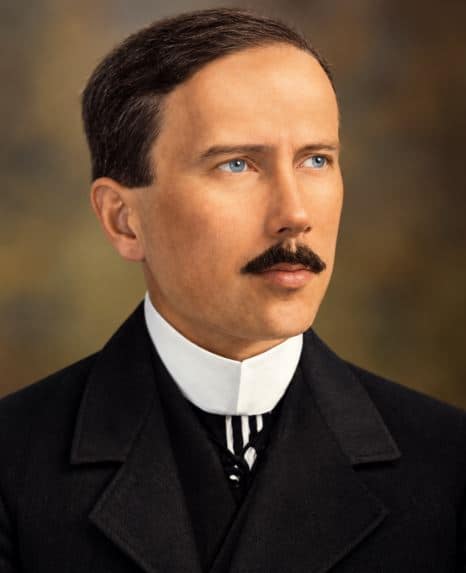
Who Was Praying Hyde?
John Nelson Hyde (1865–1912), remembered as “Praying Hyde,” was an American Presbyterian missionary to India whose life became closely associated with sustained intercession and the spiritual awakening surrounding the Sialkot conventions. His influence was not based on a large organisation or a celebrated preaching platform. Those who remembered him spoke most often about his extraordinary commitment to prayer.
Hyde's story is sometimes told through dramatic anecdotes and striking numerical claims. These accounts can be spiritually challenging, but the details are not all equally well documented. His enduring significance rests on the combination of missionary service, the testimony of fellow workers and his influence on the prayer life of others.
His life confronts an uncomfortable question: do we treat prayer as an occasional preparation for ministry, or as a central part of ministry itself?
Early Life and a Missionary Calling
Hyde was born in Illinois in 1865 and grew up in a Presbyterian family. His father, Smith Harris Hyde, was a minister. John pursued theological training at McCormick Theological Seminary in Chicago and became increasingly drawn towards missionary work.
He sailed to India in 1892 under the Presbyterian mission. His assignment placed him in the Punjab, a region of considerable linguistic, religious and cultural diversity. Learning local languages, building relationships and communicating the gospel required patience and sustained attention to the people he had come to serve.
His early years were not a story of immediate success. Missionary work involved ordinary responsibilities, personal weakness and the challenge of ministering across cultural boundaries. Over time, his commitment to intercession became the feature for which he was most widely remembered.
The Punjab: Ministry Beyond the Pulpit
Hyde served in northern India, including work associated with the Punjab mission. He engaged in evangelism and worked alongside Indian Christians and fellow missionaries. His ministry unfolded within a wider Christian movement in India, not as an isolated effort by one foreign worker.
The historical setting matters. Indian pastors, evangelists and believers were central to the life of their churches and to the revival movements of the period. Hyde's contribution should be understood alongside theirs rather than as a substitute for their leadership.
Accounts of his ministry describe a growing burden to pray for individuals, congregations and the spread of the gospel. He came to believe that missionary methods and activity could not replace dependence on the Holy Spirit.
The Punjab Prayer Union
Hyde became closely associated with a network of believers who committed themselves to prayer for spiritual awakening. The Punjab Prayer Union encouraged sustained intercession, personal consecration and expectation that God would work in the churches.
Prayer was not presented as a technique that guaranteed a particular result. Rather, the union's emphasis was on repentance, spiritual preparation and perseverance. Its members sought a deeper work of God among Christians and a stronger witness to those who had not heard the gospel.
This movement reminds us that corporate prayer can multiply the influence of individual intercession. The burden for revival was shared by a community, not carried by Hyde alone.
The Sialkot Conventions and the Search for Revival
The Sialkot conventions began in 1904 and became an important meeting place for missionaries and Indian Christian workers. Hyde was closely involved in the prayer that surrounded these gatherings, and the conventions became a defining part of his legacy.
Accounts of the 1905 convention and subsequent meetings describe powerful spiritual experiences, repentance, renewed commitment and an increased concern for evangelism. Participants understood these developments as evidence of the Holy Spirit's work.
The conventions were part of a broader period of revival interest that included movements in Wales, Korea and other regions. It would be inaccurate to attribute every spiritual development in the Punjab to Hyde's prayers alone. Nevertheless, the recollections of his colleagues consistently place his intercession at the centre of his personal contribution.
Why He Became Known as Praying Hyde
Hyde became known for spending long periods in prayer, sometimes continuing late into the night. Fellow missionaries remembered him as a man who carried the spiritual needs of particular people before God with unusual persistence.
Later biographies recount remarkable incidents connected with his prayer life. Some details come from recollections written after his death and are difficult to corroborate independently. They are best understood as testimony rather than as precise measurements of how many hours he prayed or how many conversions resulted from a particular prayer.
The central lesson does not depend on sensational detail. Hyde's example is compelling because prayer was not a decorative part of his ministry: it shaped his priorities, his relationships and his understanding of spiritual service.
— James 5:16 (KJV)
Prayer for People, Not Merely for Numbers
One of the recurring themes in accounts of Hyde's life is his concern for identifiable people. He prayed for fellow workers, church members and those he hoped would come to faith in Christ.
Some retellings attach exact annual conversion targets and results to his intercession. Such figures should be treated cautiously unless they can be traced to reliable contemporary records. Evangelism is a shared work involving many people, and a person's conversion cannot be reduced to a statistic credited to one missionary.
Hyde's example is better expressed in a simple principle: intercession becomes more purposeful when the people being prayed for are loved as individuals rather than treated as evidence of a minister's success.
The Holy Spirit and the Burden of Intercession
Hyde's prayer life was shaped by his conviction that the Church needed the Holy Spirit. He believed that spiritual awakening required more than persuasive speech, efficient organisation or an impressive programme.
Romans 8:26 teaches that the Spirit helps believers in their weakness and intercedes according to God's purposes. Acts 1:8 connects the coming of the Spirit with the power to bear witness to Christ. These passages provide a biblical foundation for prayerful dependence on God in mission.
Hyde's story should not be read as a claim that every believer must reproduce his schedule. Scripture calls Christians to persevere in prayer while also fulfilling their responsibilities to family, work, health and the community of faith.
Fire Trail reflection: Intercession does not replace faithful action. It prepares believers to serve with humility, love and dependence on the Holy Spirit.
The Cost of a Life Given to Ministry
Hyde's later years were marked by declining health. He returned to the United States in 1911 and died on 17 February 1912, at the age of forty-six.
Biographical accounts have sometimes suggested that his demanding prayer habits contributed to his physical decline. The precise medical causes and the extent to which his schedule affected his health cannot be established from devotional retellings alone. It would be irresponsible to turn his suffering into a command for Christians to neglect rest or medical care.
His life can be honoured without romanticising exhaustion. Faithfulness involves both sacrificial service and wise stewardship of the body and responsibilities God has entrusted to us.
The Influence of His Testimony
Much of Hyde's reputation grew through the testimony of people who knew him and through books written after his death. Praying Hyde, Apostle of Prayer, associated with E. G. Carre and other accounts of his life, introduced his story to successive generations of Christians.
His legacy is closely linked with the wider history of Christian intercession and missionary revival. Readers interested in prayer have found his example challenging because it directs attention away from the minister's personality and towards dependence on God.
The task of a responsible historian is to preserve that challenge while identifying the difference between contemporary documentation, later recollection and devotional interpretation.
Five Lessons from John Hyde's Life
1. Prayer is ministry, not merely preparation. Intercession is a meaningful way to serve people and participate in the work of the Church.
2. Spiritual hunger must lead to obedience. The purpose of seeking God is not to accumulate unusual experiences but to love Christ and serve others.
3. Pray for people by name. Specific, compassionate intercession keeps mission connected to the real lives of those we hope to reach.
4. Revival is a shared work. The Sialkot conventions involved Indian believers, missionaries and prayer networks. No single person should receive credit for the work of an entire community.
5. Sacrifice requires wisdom. Perseverance in prayer is admirable, but devotion should not become a justification for neglecting health, family or other responsibilities.
Frequently Asked Questions
Who was Praying Hyde?
John Nelson Hyde was an American Presbyterian missionary to India, born in 1865 and remembered for his sustained intercession and association with the Sialkot conventions.
Why was he called Praying Hyde?
Fellow missionaries remembered his unusual dedication to prayer, and the nickname became widely known through later biographies.
Where did John Hyde serve?
He served in India, particularly in the Punjab, and was associated with the prayer movement surrounding the Sialkot conventions.
Did John Hyde start the Sialkot Revival?
He was an influential participant in the prayer surrounding the conventions, but the movement involved many Indian Christian leaders, missionaries and congregations.
How many hours did he pray each day?
Accounts describe extended periods of prayer, but precise daily totals repeated in popular retellings should not be treated as independently verified facts.
When did John Hyde die?
He died on 17 February 1912, after returning to the United States.
Final Reflection: What Place Does Prayer Have in Our Lives?
John Hyde's legacy is not a formula for producing revival. It is a testimony to a man who believed that God hears prayer and that ministry must remain dependent on the Holy Spirit.
His life invites us to reconsider what we measure. We can count meetings, followers, publications and programmes, but the hidden life of prayer is not easily captured by public statistics.
The challenge of Praying Hyde is therefore personal. Will we pray for people with compassion, seek God with perseverance and remain faithful in the ordinary responsibilities of our calling?
The lasting value of his story is not that we might imitate every detail of his life, but that we might take prayer more seriously in our own.
Recommended Books & Further Reading
For readers who want to explore Hyde’s life and the wider history of missionary prayer, these books offer biographical testimony and historical context.
- Praying Hyde, Apostle of Prayer: The Life Story of John Hyde — An account of Hyde’s missionary life and the prayer ministry for which he became known. Later biographical recollections should be read with appropriate historical discernment.
As an Amazon Associate, I earn from qualifying purchases at no additional cost to you.
Historical Sources
Accounts of Hyde’s ministry depend substantially on missionary recollections and later biographies. The distinction between documented chronology and devotional testimony is important when interpreting extraordinary claims.
- Praying Hyde, Apostle of Prayer — E. G. Carre and associated early biographical accounts of John Hyde.
- The Life of Prayer and contemporary accounts of the Sialkot conventions and the Punjab Prayer Union, where available.
- Historical records of the Presbyterian mission in the Punjab and accounts of the early twentieth-century Indian Christian revival.